
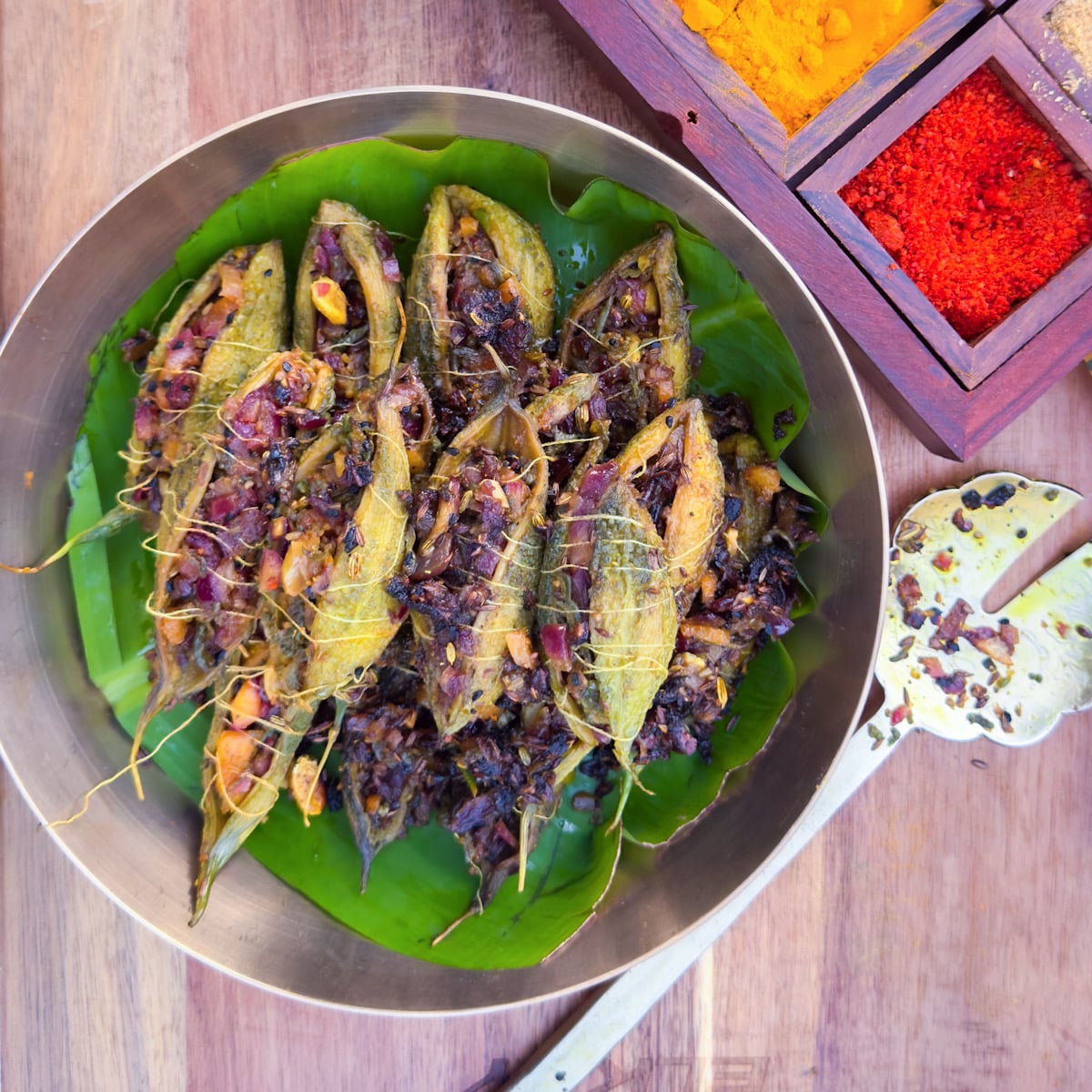
This Bharwan karela recipe is exactly how my mother makes it —bold, tangy, and full of the warm flavors I grew up eating. Her raw stuffing of onions, green mango, karela peels, kalonji, and anardana gives the dish a bright, rustic taste that settles beautifully as it cooks.
If you've been looking for an easy stuffed karela recipe that tastes truly homemade and gets even better the next day, this home-style bitter gourd dish will feel familiar and comforting.
Jump to:
The Journey of Karela: How It Reached India and Why It Stayed
Karela didn't start its life in India. It traveled here over many years through old trade routes connecting Africa, Arabia, and Southeast Asia. Traders carried bitter gourd seeds and planted them wherever they stopped. Because karela grows well in hot weather and doesn't need perfect soil, it adapted quickly to Indian soil and its climate.
Once it arrived, India welcomed karela in two big ways:
- As medicine — Ayurveda used its natural bitterness to help with digestion, detox, and blood sugar balance.
- As food — different regions created their own karela dishes, from bharwan karela in the north to korola shorshe in the east, and pavakkai poriyal in the south, each region adding its own local flavors and traditions.
Karela stayed because it was useful, healthy, and easy to grow. Over time, it became part of everyday meals and family traditions—a vegetable that traveled across continents but found its true home in Indian kitchens.
What is Bharwan Karela?
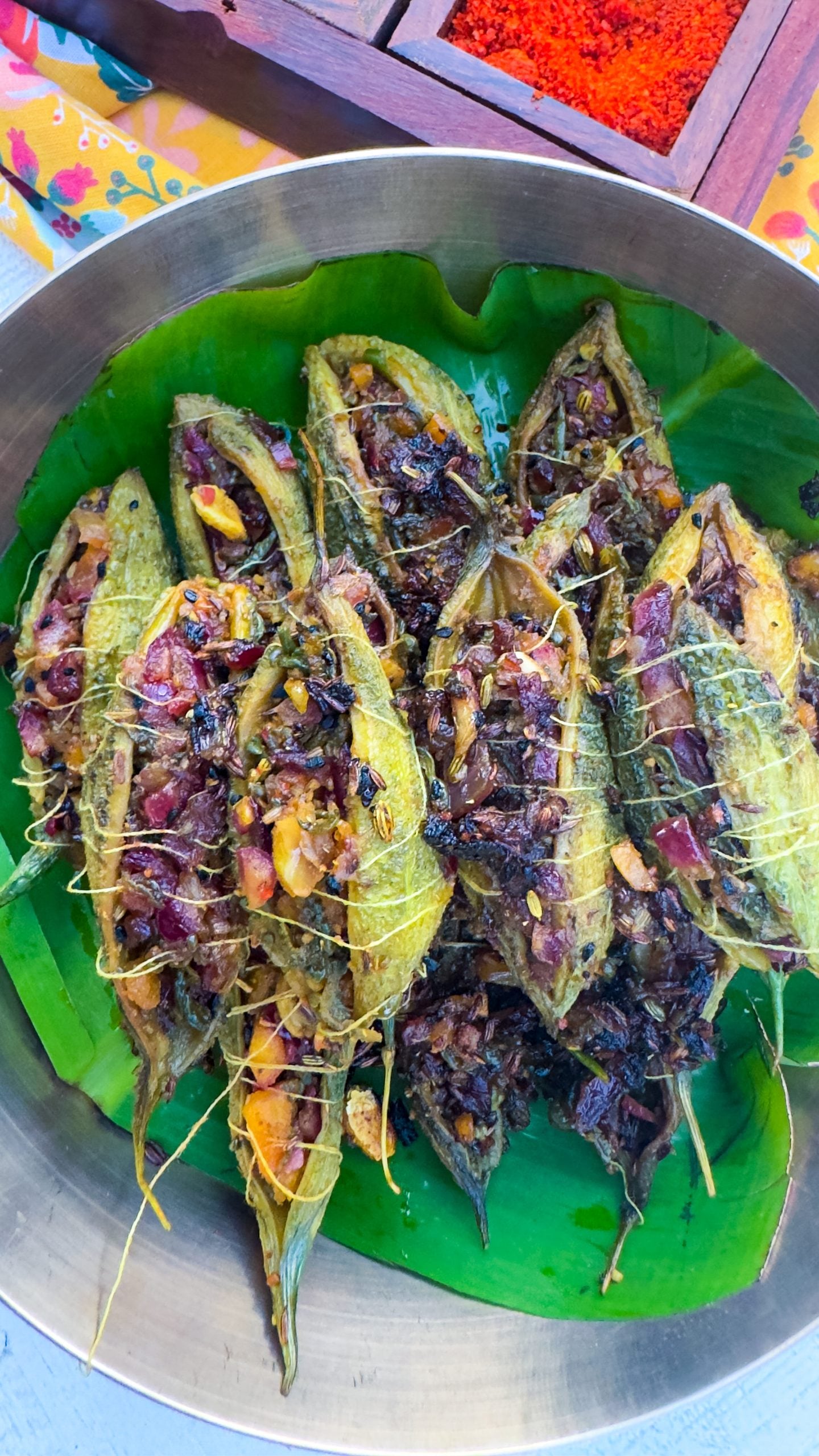
Bharwan karela means stuffed bitter gourd. It's a traditional Indian dish known for its mix of bitter, tangy, and warm flavors. The karela is slit, lightly peeled, salted, and filled with flavorful stuffing, then cooked slowly until soft and tender.
Every family has its own version, but the raw-stuffing method—using onions, green mango, karela peels, kalonji, and anardana—is one of the oldest and most nostalgic. It keeps the stuffing fresh and bright, and as the karela cooks, everything blends into a deep, balanced flavor.
How to Reduce Bitterness in Karela?
The easiest way to reduce bitterness is to salt it. After lightly peeling the karela, sprinkle it with salt and let it sit for 15–20 minutes. The salt pulls out extra bitterness, and when you squeeze the karela, the sharp taste reduces a lot.
You can rinse it once to remove any leftover bitterness. Ingredients like green mango, anardana, and kalonji also help balance the flavor, adding tang and warmth that make the dish enjoyable even for people who usually avoid karela.
Slow cooking on low heat helps too. As the karela cooks gently, the stuffing settles in, and the bitterness softens and becomes more pleasant.
Should Karela Be Peeled?
Yes — but only lightly, and only when the recipe needs it.
Peeling karela isn't a strict rule. It really depends on the dish you're making. Some recipes keep the skin on — like simple stir‑fries or thin karela chips — because the skin adds texture and a little extra bite.
But for stuffed karela (bharwan karela), a light peel works best. Removing just the tough outer bumps helps reduce bitterness and makes it easier for the stuffing to hold inside. Still leave enough skin so the karela keeps its shape and natural flavor while cooking.
A gentle peel is the perfect balance — just enough to mellow the bitterness, but not so much that the karela becomes too soft or loses its structure and shape.
How to Store and Reheat Bharwan Karela
Let the karela cool completely before storing it in an airtight container. The raw stuffing — onions, green mango, karela peels, kalonji, and anardana — continues to deepen in flavor as it rests.
To reheat, warm it slowly on low heat in a pan. This keeps the stuffing soft and prevents the karela from breaking. If it looks dry, add a teaspoon of oil to refresh it. You can microwave it too, but stovetop reheating gives the best texture.
This easy reheating is one reason bharwan karela is loved in so many homes.
Benefits of Karela (Bitter Gourd)
Karela is packed with nutrients and has been used in traditional medicine for centuries. It's rich in vitamins A, C, and B vitamins, along with minerals like iron and potassium.
Some well‑known benefits include:
- Supports blood sugar balance
- Helps digestion
- Boosts immunity
- Improves skin health
- Detoxifies the body
- Supports liver function
Even though karela is naturally bitter, cooking it with tangy and warm spices makes it delicious and nourishing.
Why You Should Give This Recipe a Try
This bharwan karela recipe is more than just a dish —it's a memory. It's the kind of food that reminds you of home, patience, and the way flavors settle when cooked with care.
If you enjoy honest, comforting recipes, this one will surprise you. The raw stuffing, the slow cooking, and the way it tastes even better the next day —it's everything that makes Indian home cooking special.
If you've ever hesitated to try karela, this is the version that'll change your mind.
Recipe
Bharwan Karela Recipe (Home-Style Stuffed Bitter Gourd)
Equipment
Ingredients
- 6-8 medium karela bitter gourds; 500g
- 1 tablespoon salt for rubbing and soaking 18g
- ½ teaspoon salt for cooking, or to taste 3g
- 2 medium onions, finely chopped 200g
- 1 small raw green mango, finely chopped 100g
- ½ cup Karela peels (from the same karela), finely chopped 75g
- 2-3 green chilies, finely chopped 5g
- 2 teaspoon kalonji (nigella seeds) 6g
- 2 teaspoon anardana powder 6g
- 1 teaspoon red chili powder 3g
- ½ teaspoon turmeric 1.5g
- 1 tablespoon coriander powder 4g
- 2 tablespoon amchur 16g if mango isn’t available or not enough tart
- 2 tablespoon mustard oil or any cooking oil 28g
- 1 tablespoon jaggery 15g
Instructions
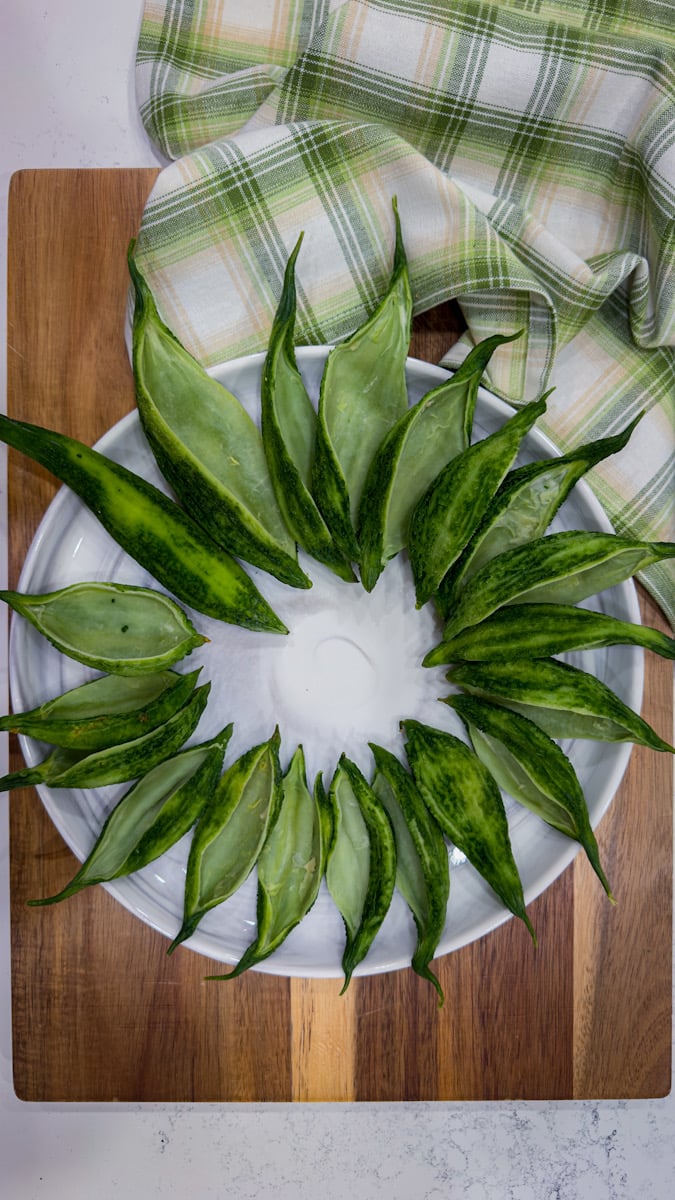
- Wash the karela, then peel them lightly—just enough to remove the tough outer bumps.
- Slit each karela lengthwise and scoop out the seeds, reserving any tender seeds for the stuffing.
- Rub salt over the karela, including inside each slit.
- Set aside for 15–20 minutes, then squeeze gently to remove some of the bitterness.
- Rinse well to remove the excess salt, then squeeze out as much water as possible.
- The rinsed and squeezed karela are now ready to be filled.

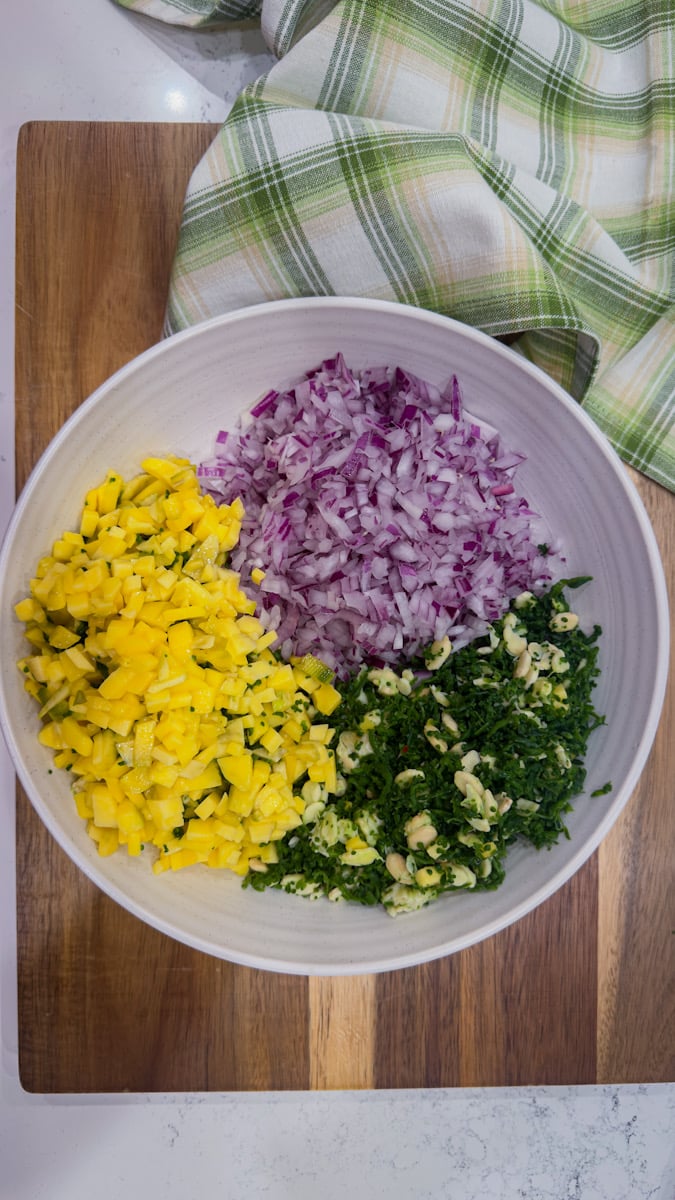
- In a bowl, combine the chopped onions, green mango, karela peels, and reserved tender seeds.
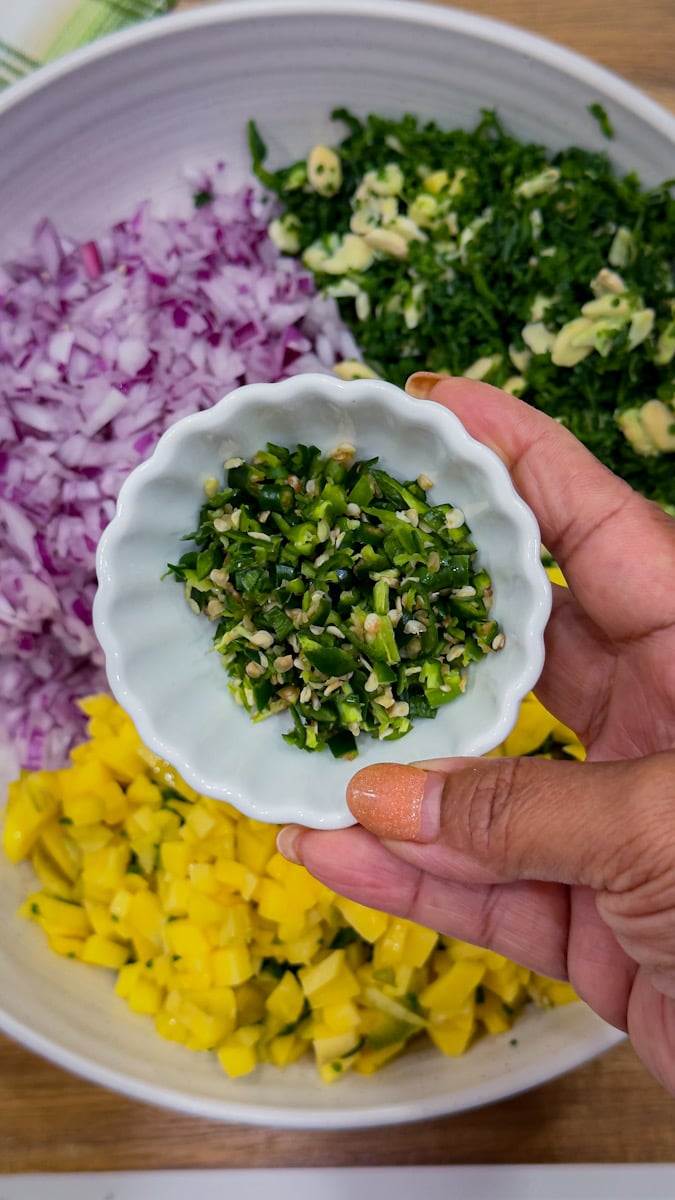
- Add the chopped green chilies.
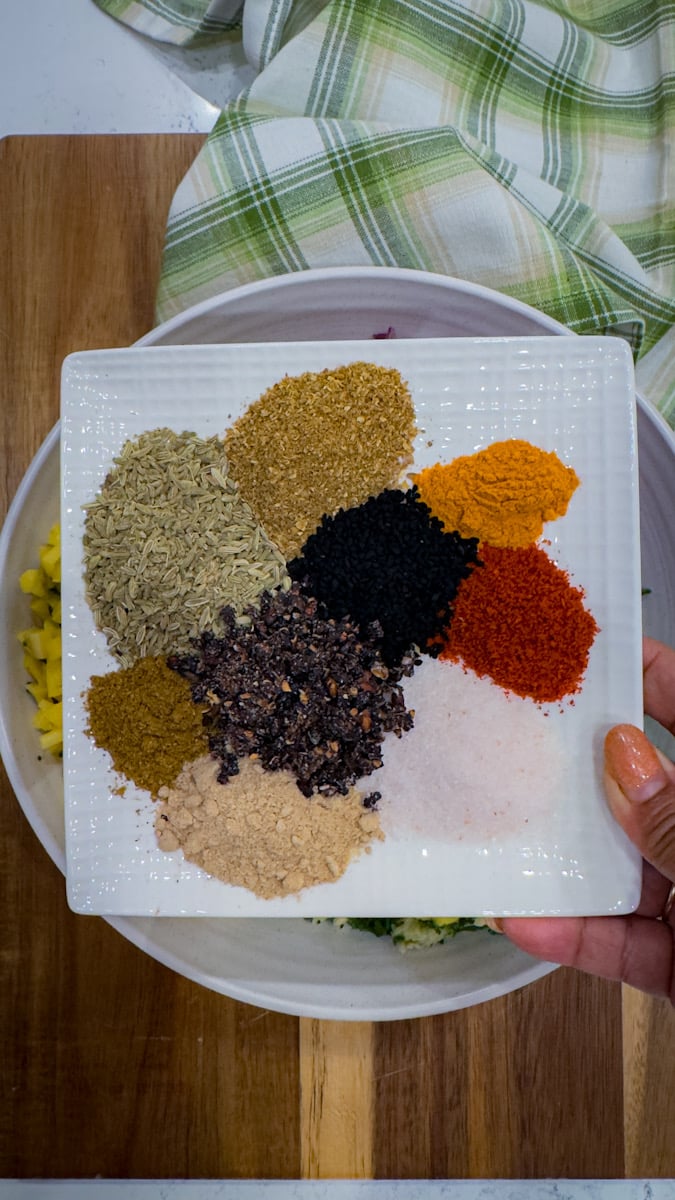
- Add the kalonji, crushed anardana, red chili powder, turmeric, crushed fennel seeds, coriander powder, garam masala, amchur powder, and salt to taste.
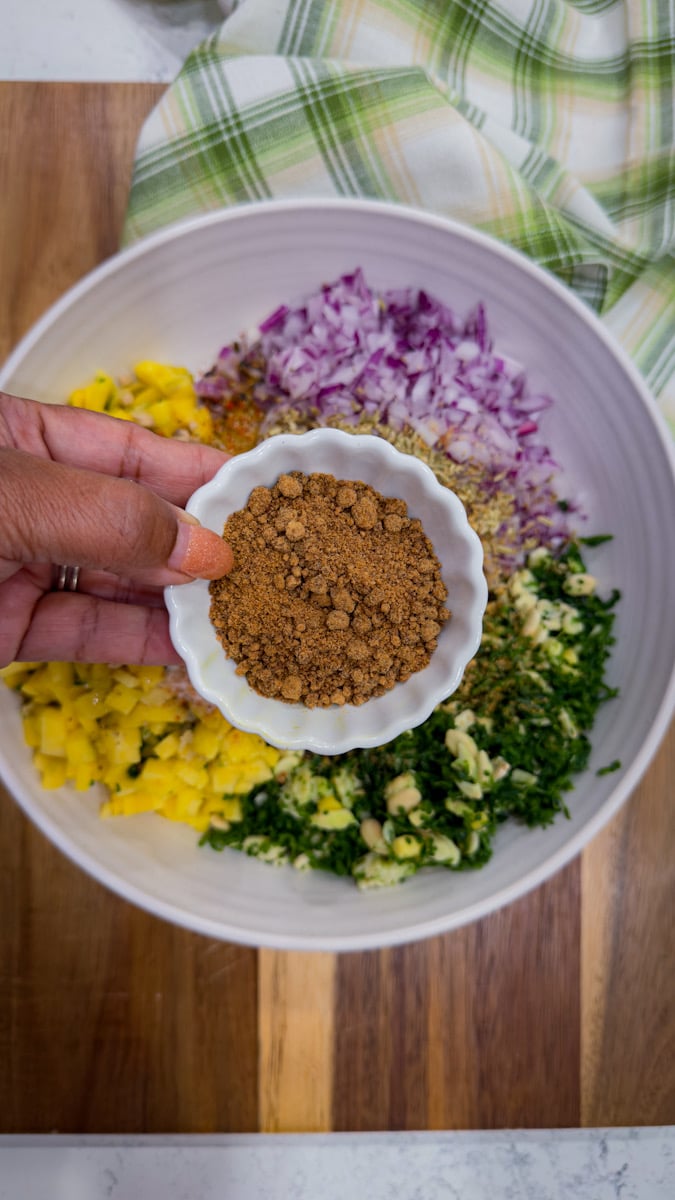
- Add the jaggery powder.
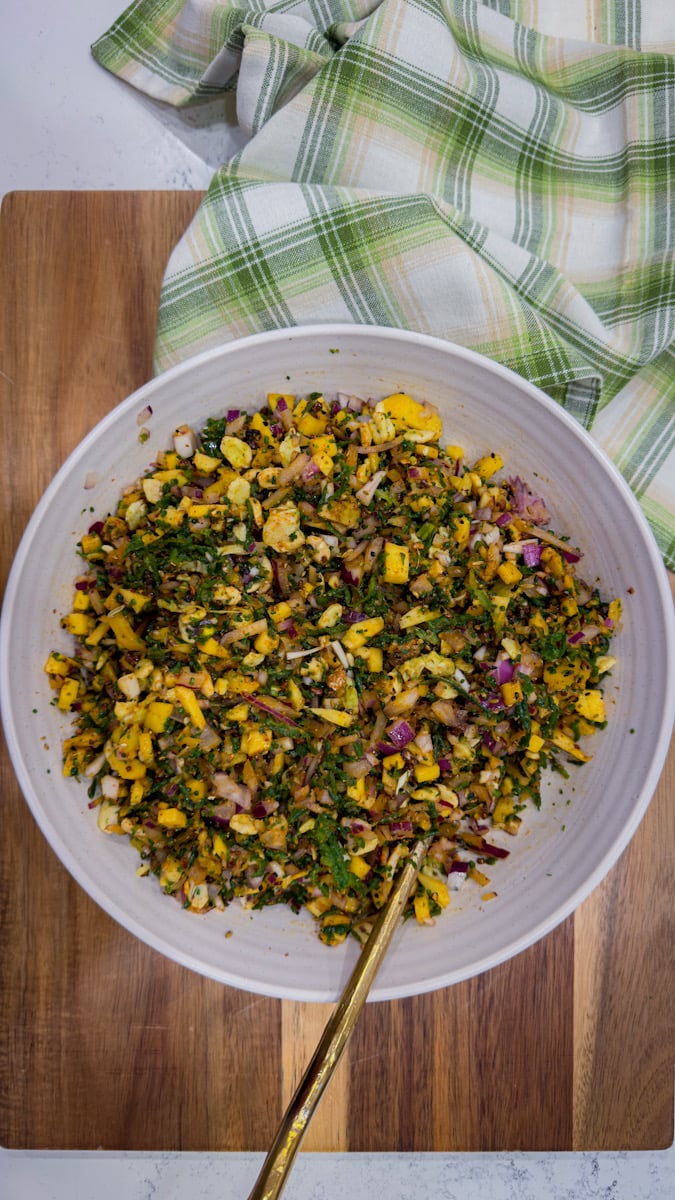
- Mix thoroughly until all the ingredients are evenly combined, then taste the stuffing and adjust the seasoning as needed.
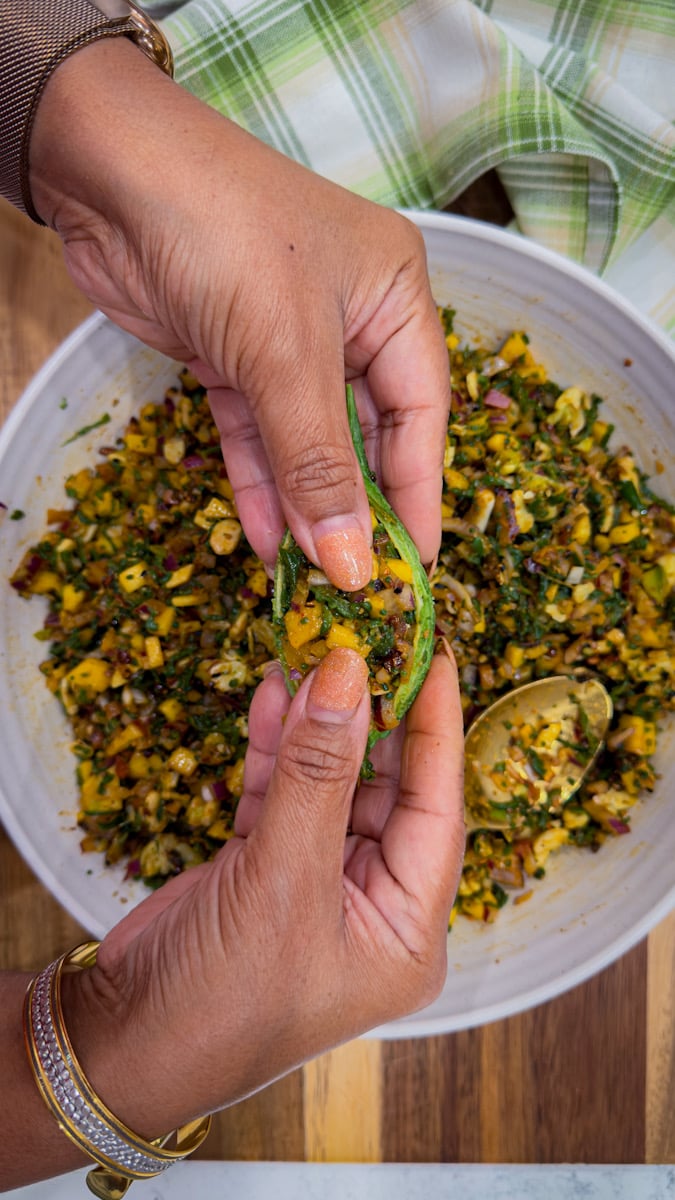
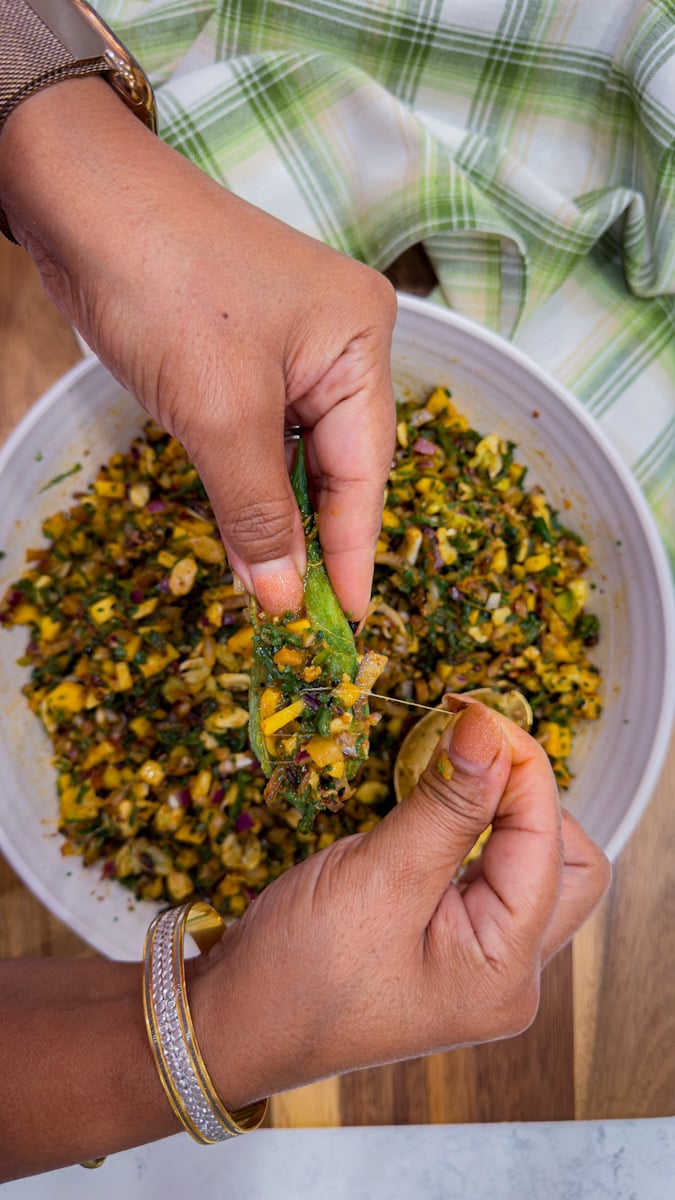
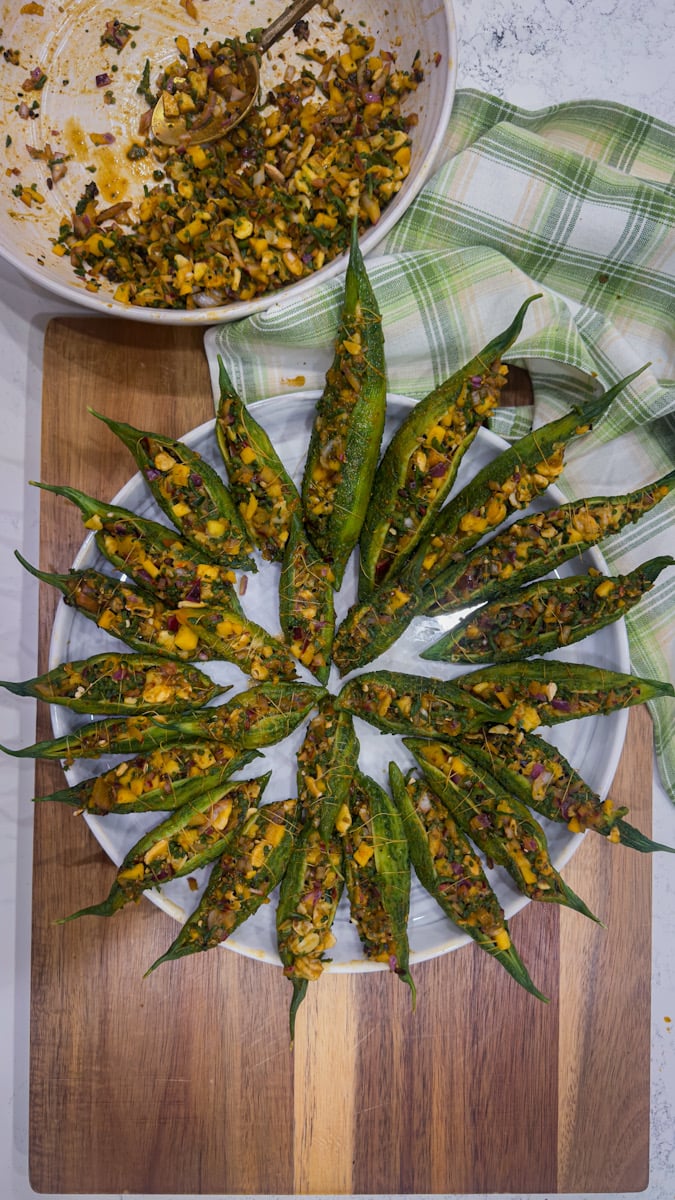
- Fill each karela firmly with the stuffing.
- If needed, tie each stuffed karela with kitchen thread to keep it closed.
- Once all the karela are filled, arrange them on a plate and set them aside until youare ready to cook.
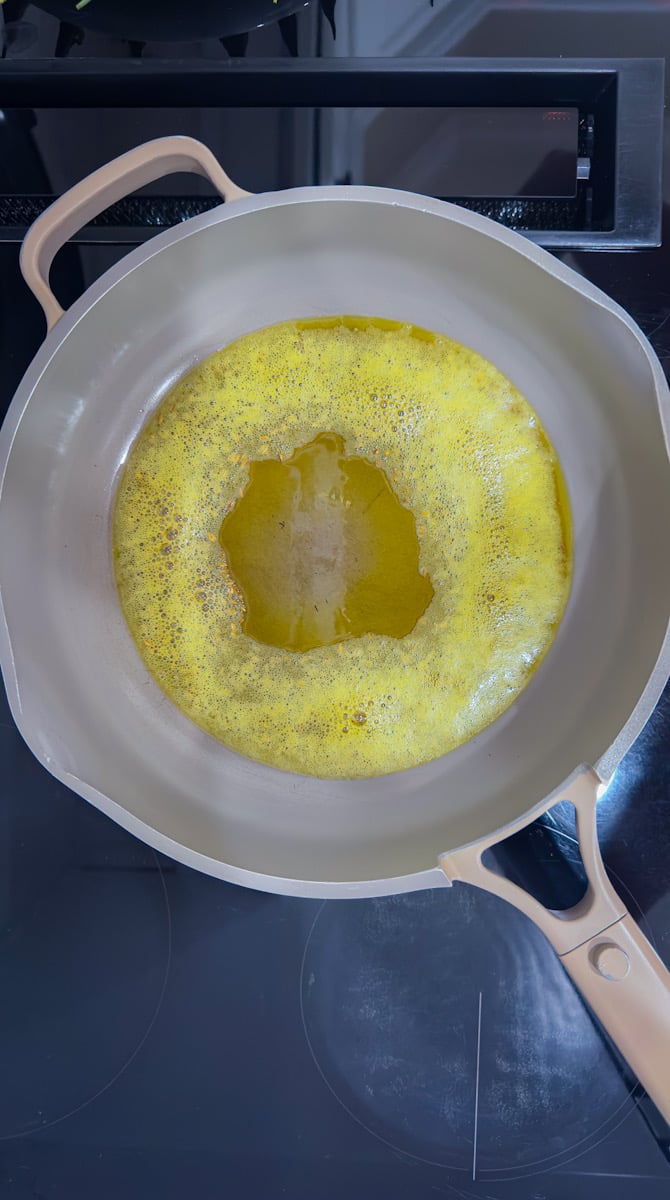
- Heat the mustard oil in a wide pan over medium-low heat.

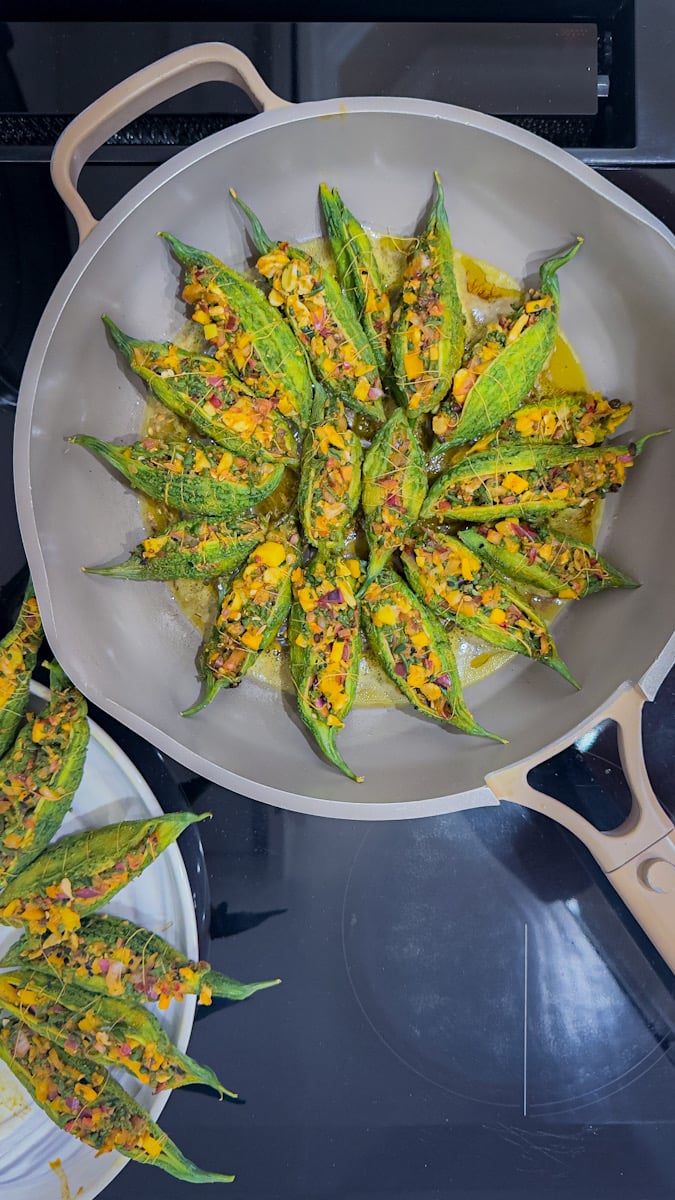
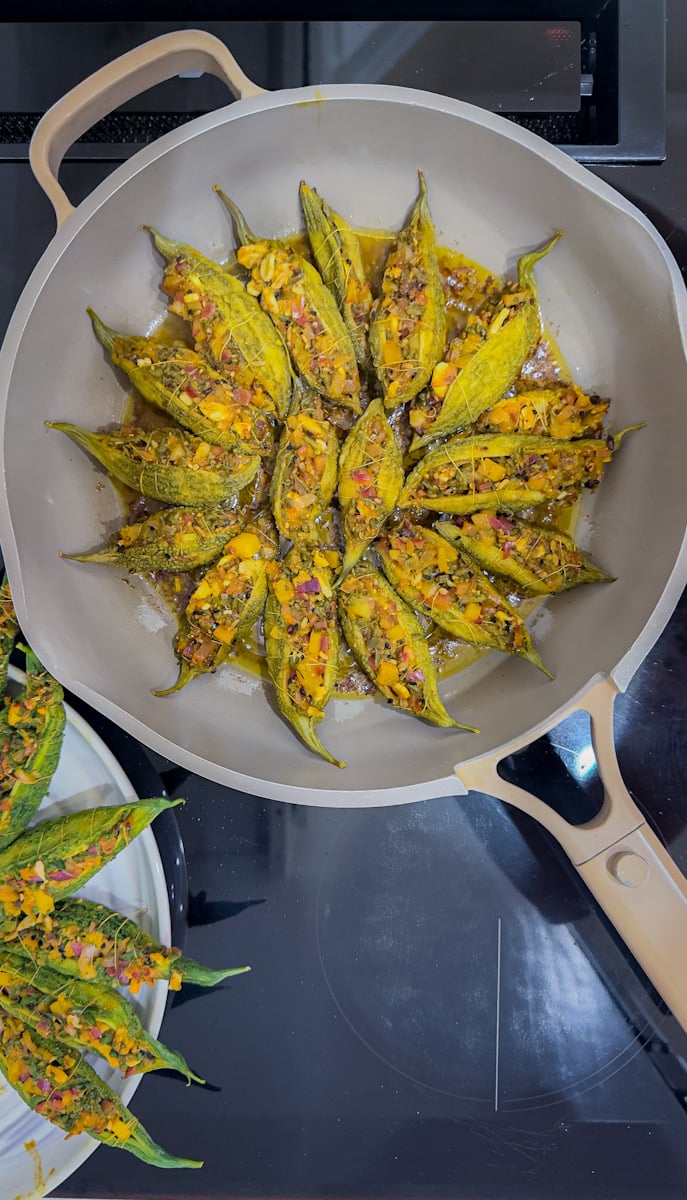
- Gently arrange the stuffed karela in the pan.
- Cover and cook over low heat for 35–45 minutes, turning the karela occasionally for even cooking.

- Allow them to brown slowly so the stuffing settles and the bitterness mellows.
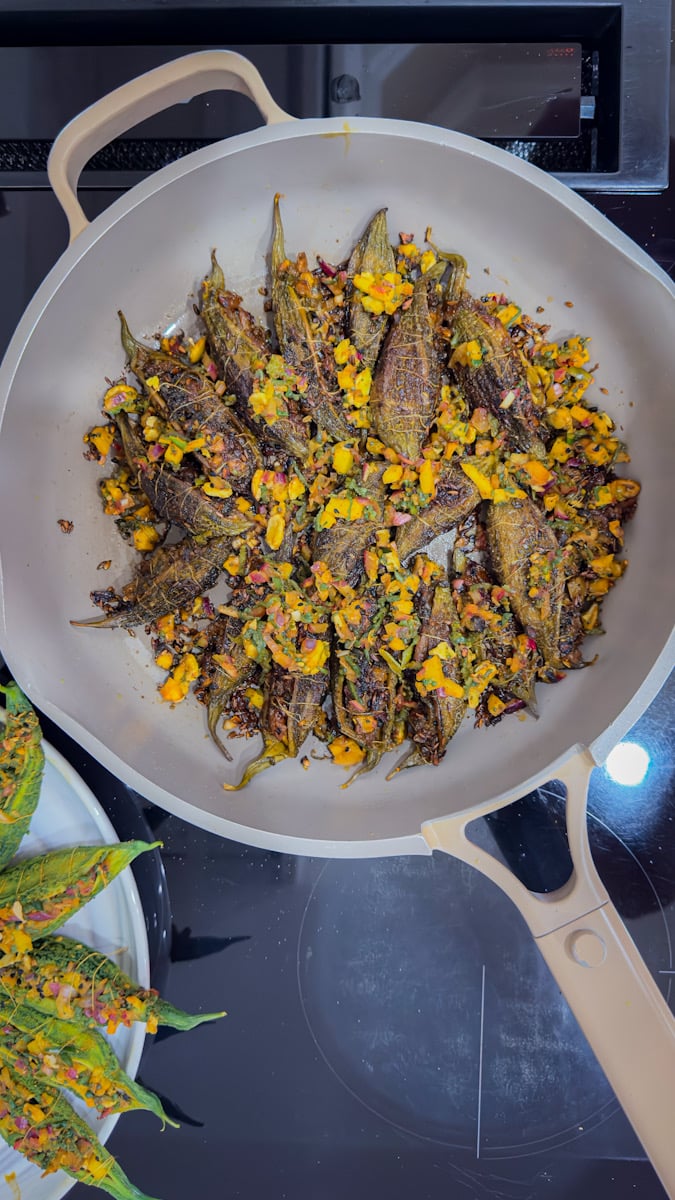
- When the karela are almost done, add any leftover stuffing to the pan and cook everything together for a few more minutes.
- Once the karela are tender and lightly crisp, turn off the heat and let them rest briefly.
- Serve the bharwan karela with hot rotis, parathas, dal-chawal, or dahi. The flavors deepen overnight, so the dish tastes even better the next day.

Leave a Reply