
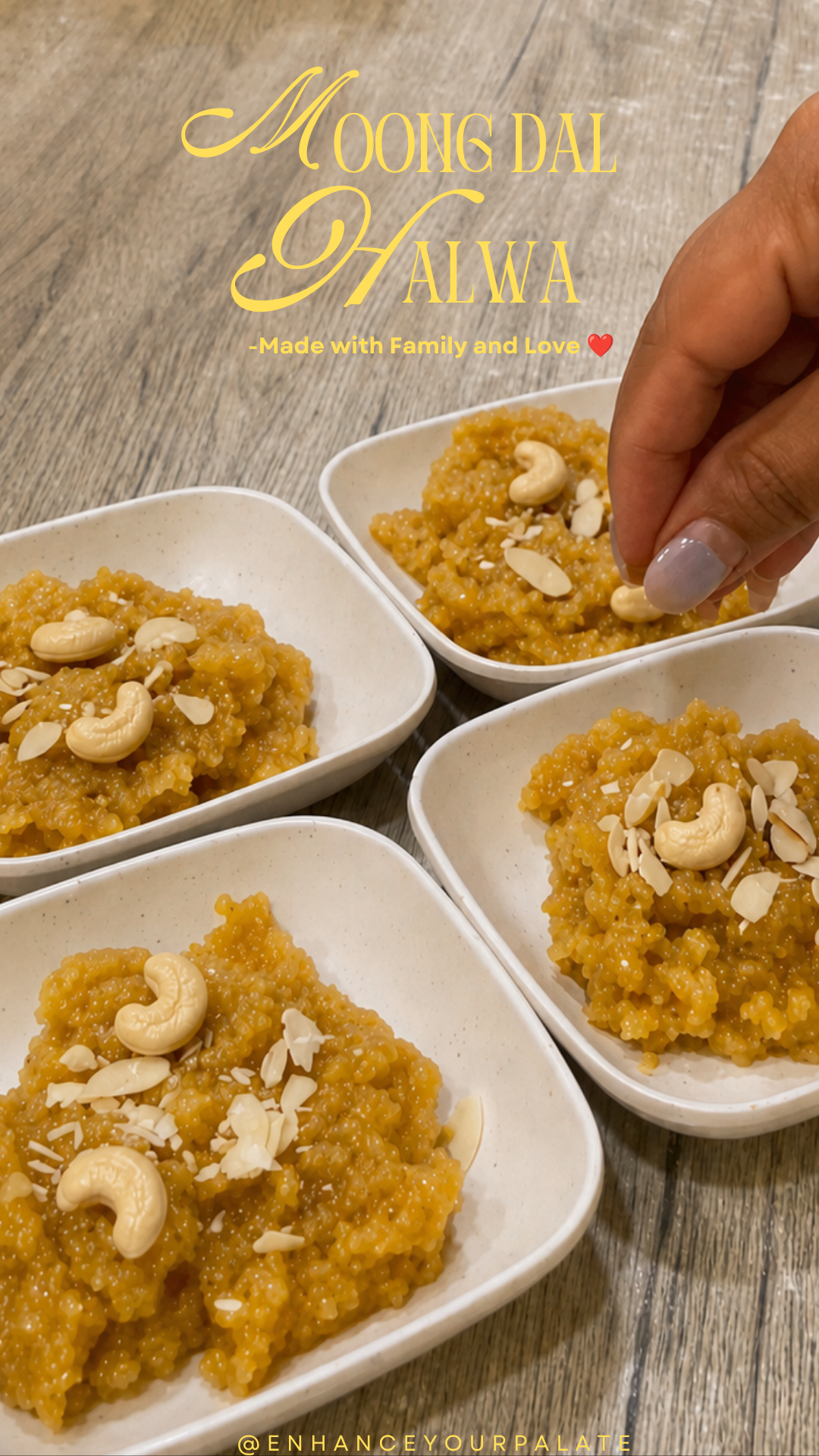
Some desserts satisfy a sweet craving, and others carry memories — Rajasthani Moong Dal Halwa belongs to the second category. Rich with ghee, deeply roasted, and patiently cooked, this iconic North Indian dessert appears in winter evenings, wedding buffets, and festive celebrations, filling the home with the aroma of slow‑roasted lentils and ghee. It’s comforting, nostalgic, and rooted in tradition, with every spoonful shaped by time rather than shortcuts — the very reason behind its unmistakable grainy texture and nutty aroma.
A Sweet with Roots That Traveled Across Cultures
The word halwa traces back to the Arabic term “ḥilw” (حلو), meaning sweet. During the medieval period — roughly the 8th to 18th century — traders and travelers from the Middle East brought new food traditions into India. Along with spices and ingredients, they shared cooking techniques, especially the slow‑roasting method used for making halwa. This style of patiently cooking ingredients in ghee until they turn nutty and aromatic became the foundation of many Indian sweets.
Rajasthan, with its strong Rajput and Mughal connections, absorbed these influences beautifully. Royal cooks began experimenting with this technique using local ingredients — moong dal, ghee, milk, and sugar — staples that were always available in desert households. Over time, the halwa technique blended seamlessly with Rajasthani cooking, evolving into something richer, deeper, and perfectly suited for cold winter nights.
How Moong Dal Halwa Became a Rajasthani Classic
What began in palace kitchens slowly made its way into community feasts and everyday homes. Local cooks added their own touches — especially the long, patient roasting that gives moong dal halwa its signature grainy texture. Families developed their own versions, but the heart of the technique remained unchanged: a smooth dal paste roasted slowly in generous ghee until it naturally breaks down into delicate, aromatic grains.
A Winter Dessert That Adds Warmth
Moong Dal Halwa is undeniably an indulgence — rich with ghee, sugar, and slow‑roasted dal. It’s the sweet you enjoy mindfully, not casually. Traditionally, it’s prepared in winter because it warms the body from within. The combination of ghee, lentils, and slow cooking creates a natural heat that’s comforting during cold months. In Rajasthan’s desert winters, this halwa wasn’t just a treat; it was a way to add warmth and nourishment when temperatures dropped.
Texture Profile
The texture of authentic Rajasthani Moong Dal Halwa is its pride — and its identity.
It’s grainy yet soft, a beautiful contrast that defines this dessert. When you scoop it, the halwa feels dense and rich, but the moment it touches your tongue, it begins to melt slowly, releasing the warmth of ghee and the deep, roasted aroma of moong dal.
There’s a gentle bite from the grains — just enough to remind you of the slow roasting — followed by a smooth, buttery finish that only comes from hours of patient cooking. Every spoonful feels warm, cozy, and indulgent, almost like the dessert is hugging you from the inside.
This harmony of grainy, glossy, aromatic, and melt‑in‑the‑mouth is what makes moong dal halwa truly unforgettable — a texture that no shortcut can ever recreate.
Premix Option (Make‑Ahead)
When the dal is fully roasted — deep golden, aromatic, and grainy — you can stop cooking before adding the sugar‑water. Let the mixture cool down completely. Store this roasted dal‑and‑ghee mixture as a premix. When needed, warm the premix, add warm sugar‑water, and cook it into fresh halwa in minutes.
To prepare halwa using the premix, use equal portions of premix and sugar, along with four times the water. Heat the water, dissolve the sugar, and add a splash of milk to remove any impurities. Then add the premix and cook on low flame, stirring until all the water is absorbed and the halwa turns glossy and thick. Finish with cardamom, saffron, and nuts, and enjoy a perfectly fresh halwa in minutes.
Why This Recipe Works
- Follows the authentic Rajasthani technique
- Uses a smooth dal paste for natural grain formation
- Generous ghee ensures even roasting and a glossy finish
- Naturally warming, making it ideal for winter desserts
Recipe
Rajasthani Moong Dal Halwa
Equipment
- Wok
Ingredients
Pantry
- ½ cup Moong Dal
- ½ cup Sugar
- 2 cups Water
Dairy
- ½ cup Ghee
- 1 tablespoon Milk
Spices/Seasoning/Flavoring
- ½ teaspoon Cardamom powder
- 1 Pinch Saffron
Garnish
- 1 tablespoon Almonds Slivered
- 1 tablespoon Cashews Chopped
- 1 tablespoon Pistachios Sliced
Instructions
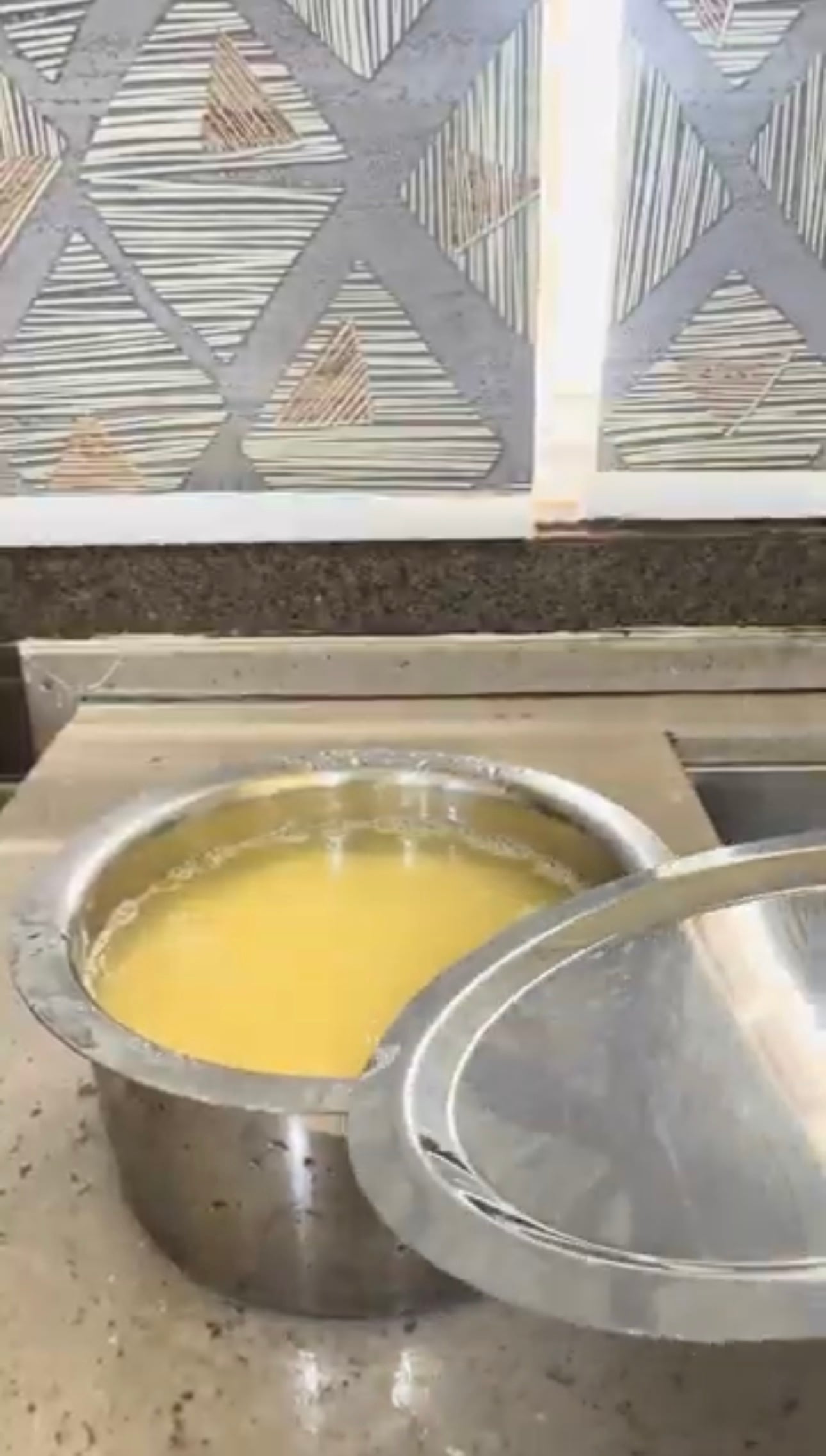
Step 1: Soak the Dal
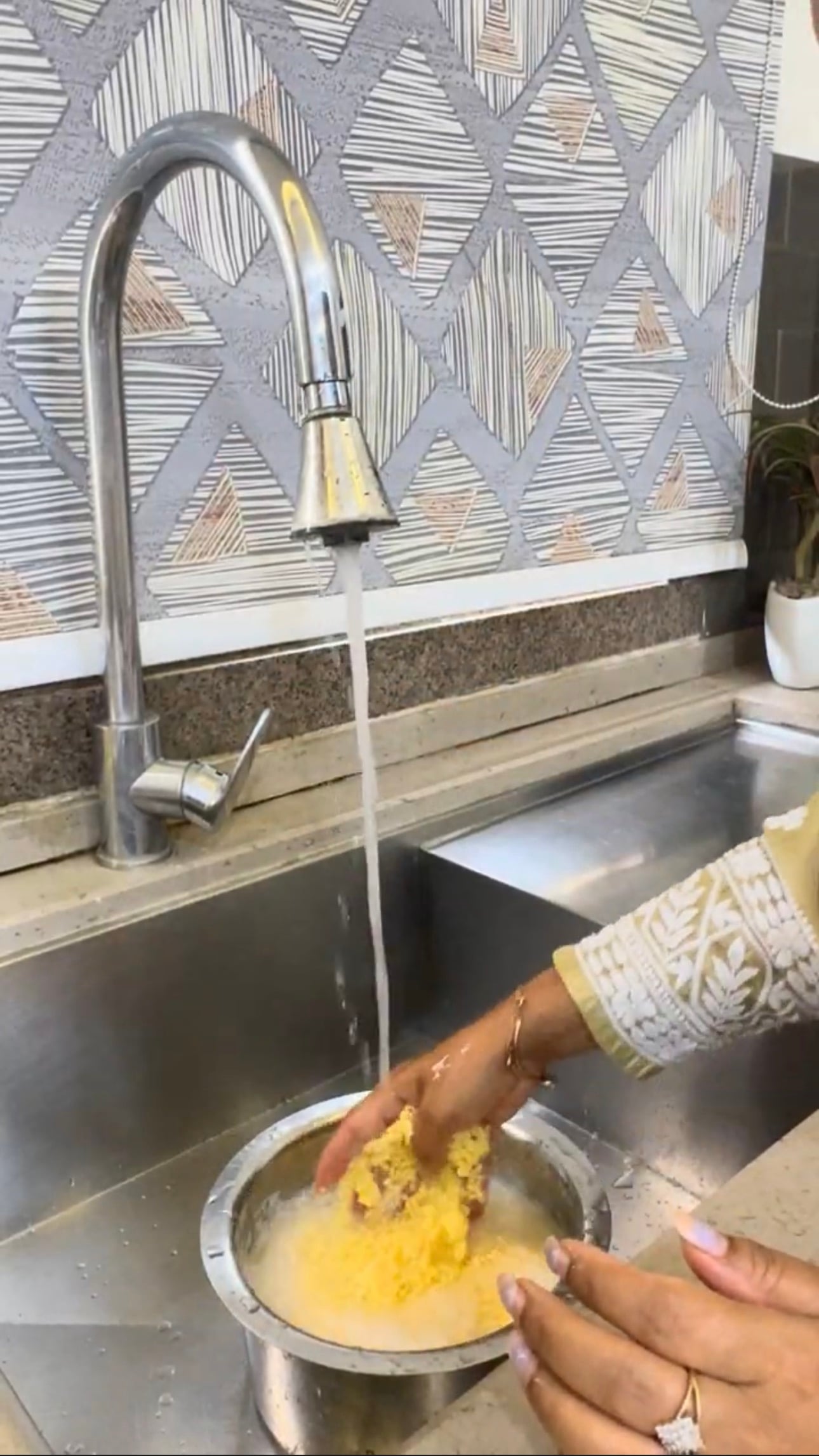
- Wash moong dal until the water runs clear.
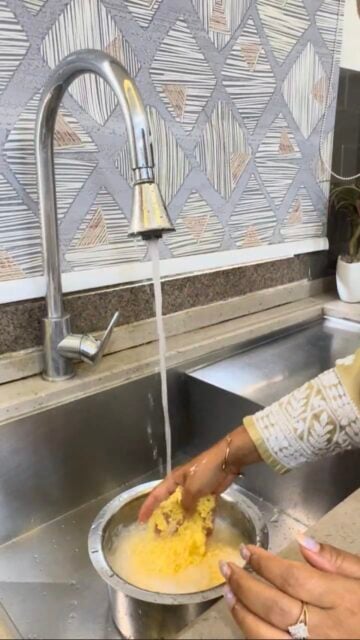
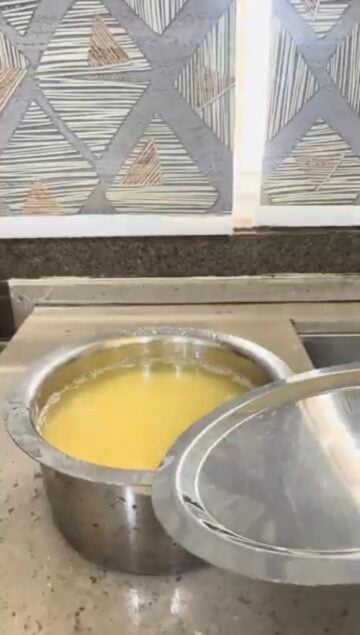
- Soak for 6 hours (or overnight) until fully hydrated.
Step 2: Grind into a Smooth Paste
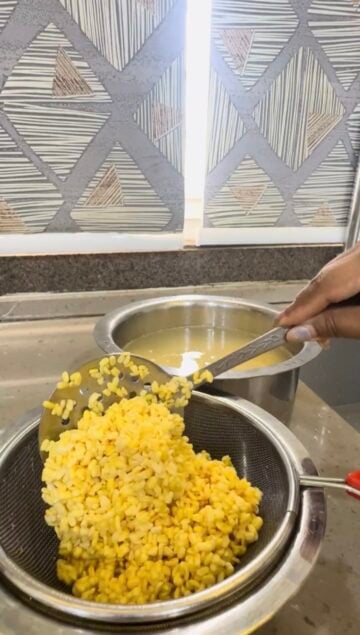
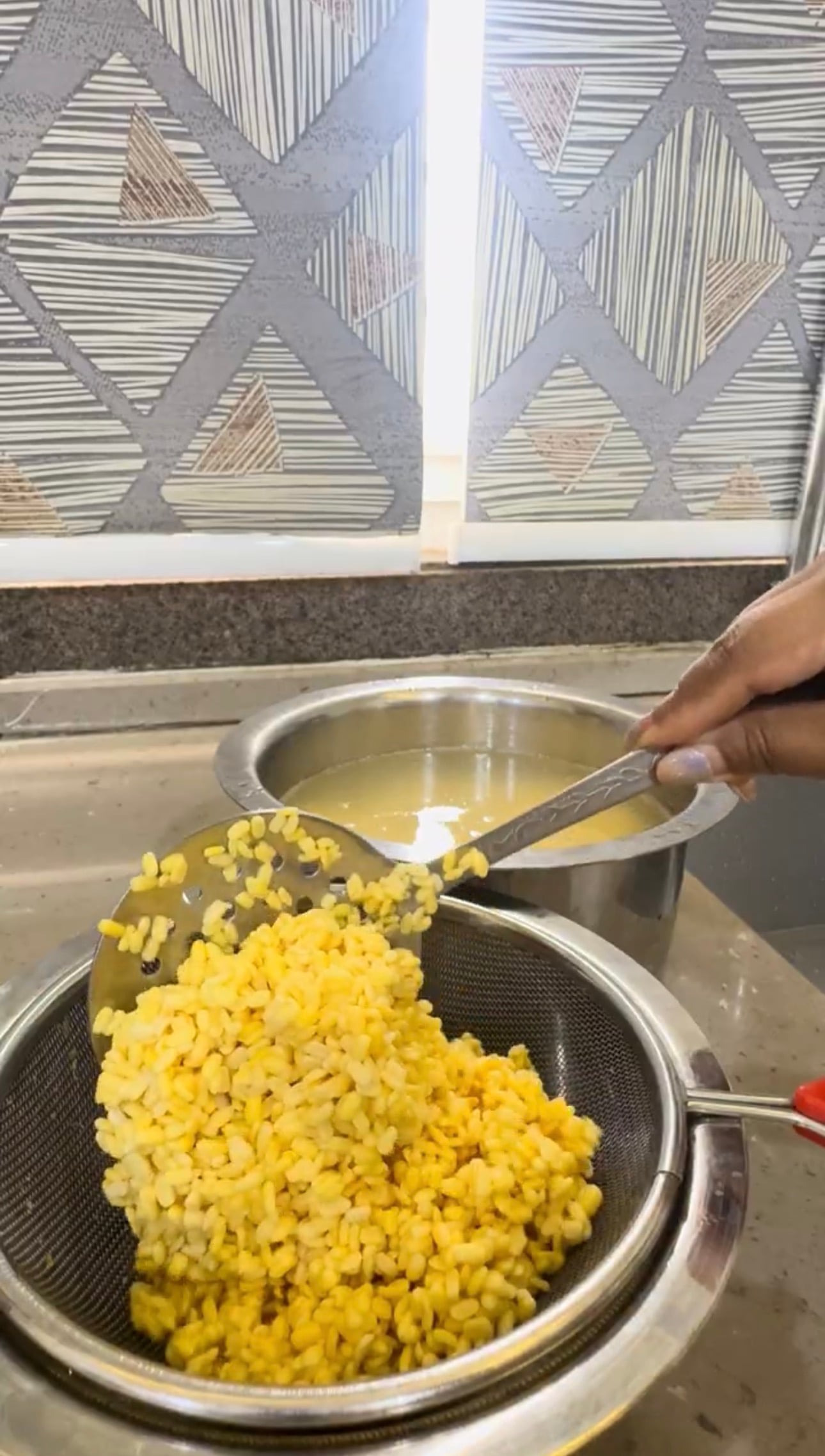
- Drain completely.
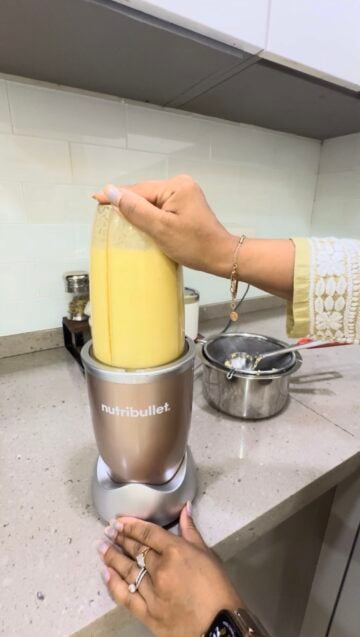
- Grind into a smooth paste using minimal water.
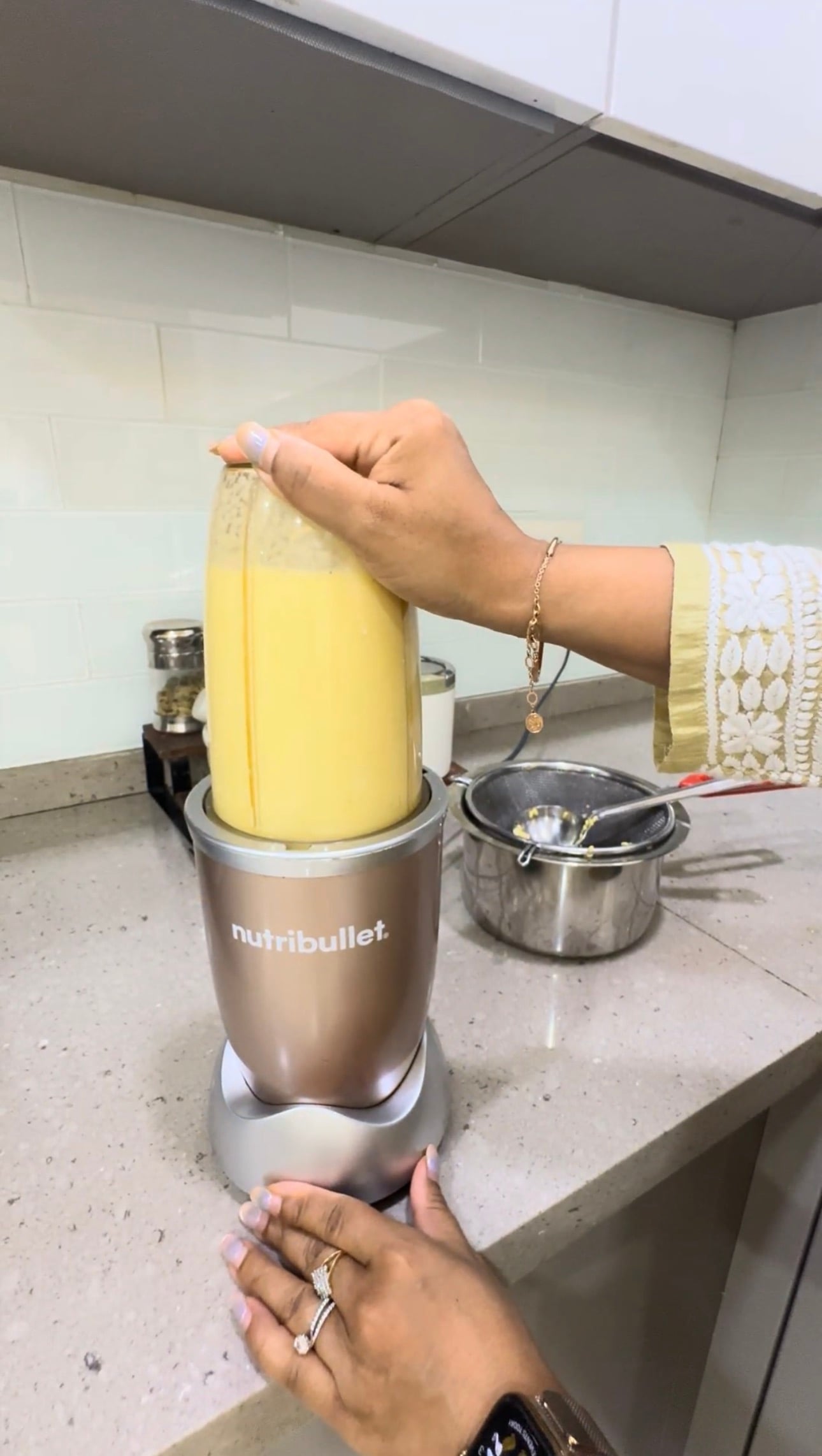
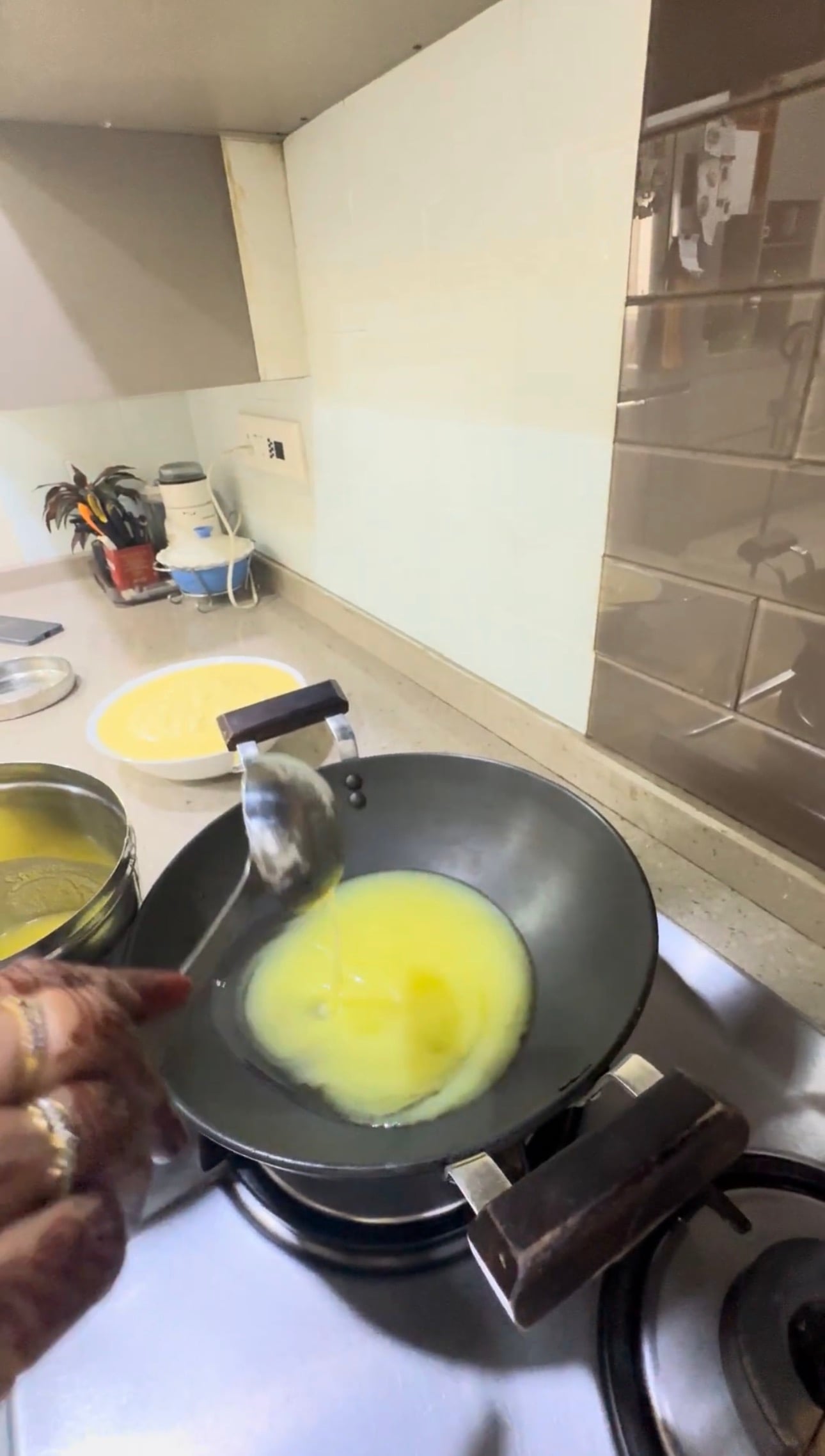
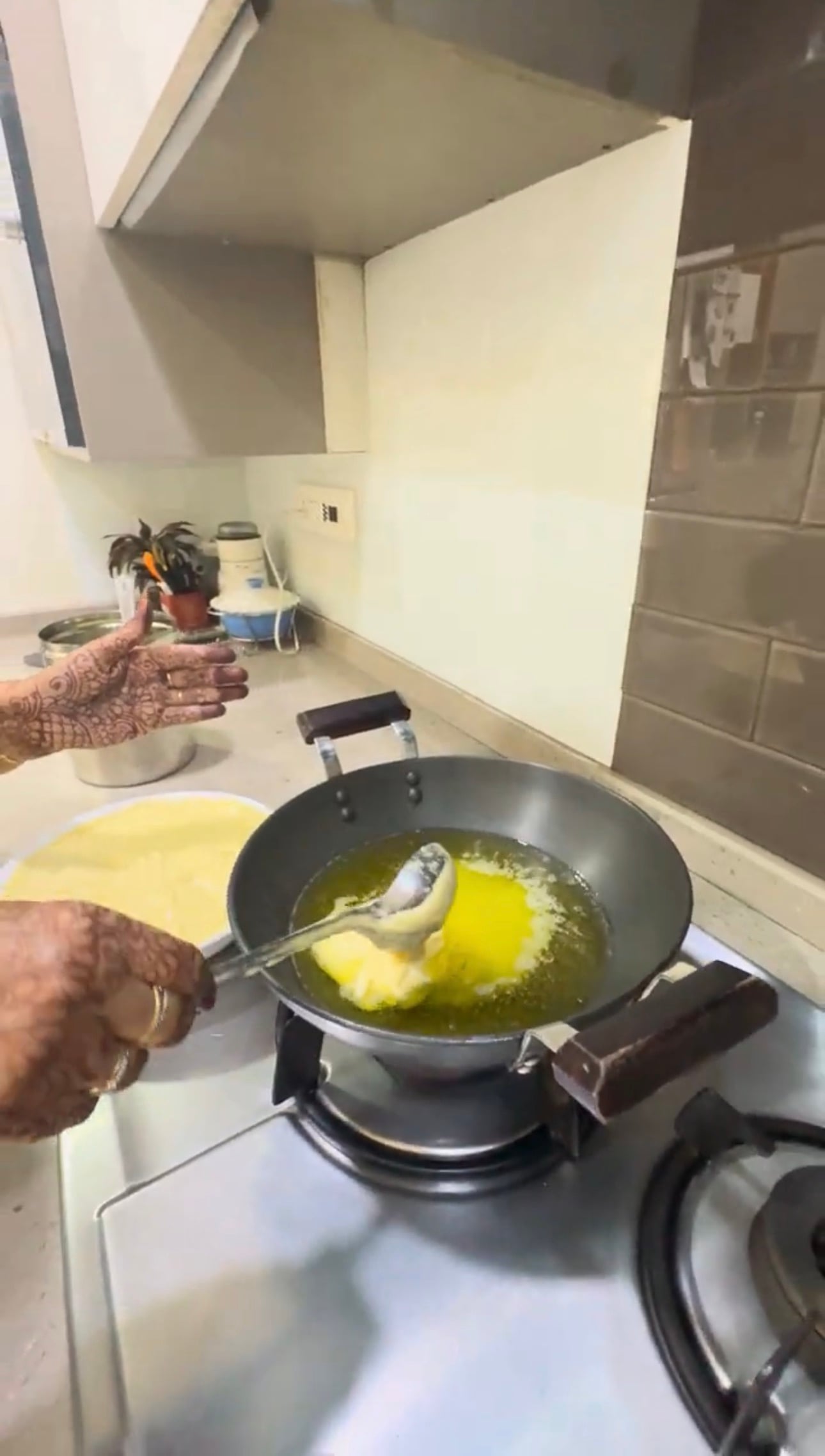
Step 3: Roast the Ground Dal in Ghee
- Heat ghee in a heavy-bottomed kadai/wok.
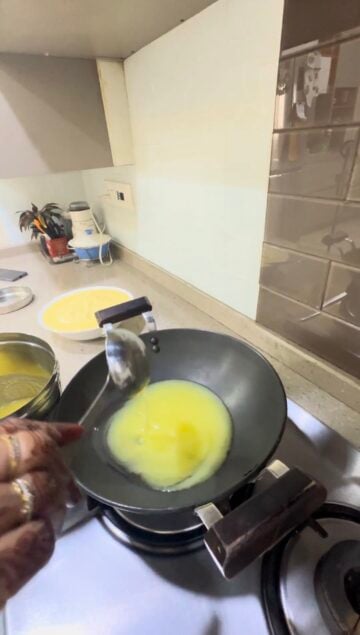
- Add the ground dal and roast on the medium low heat.
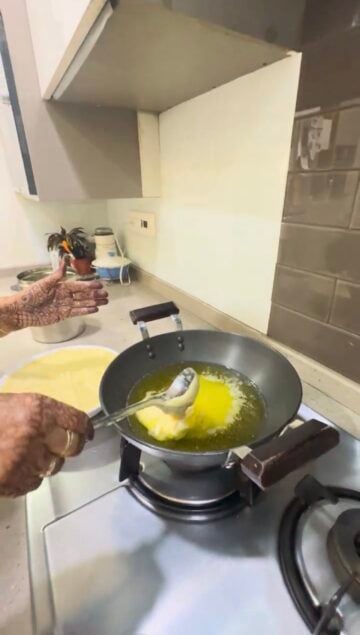
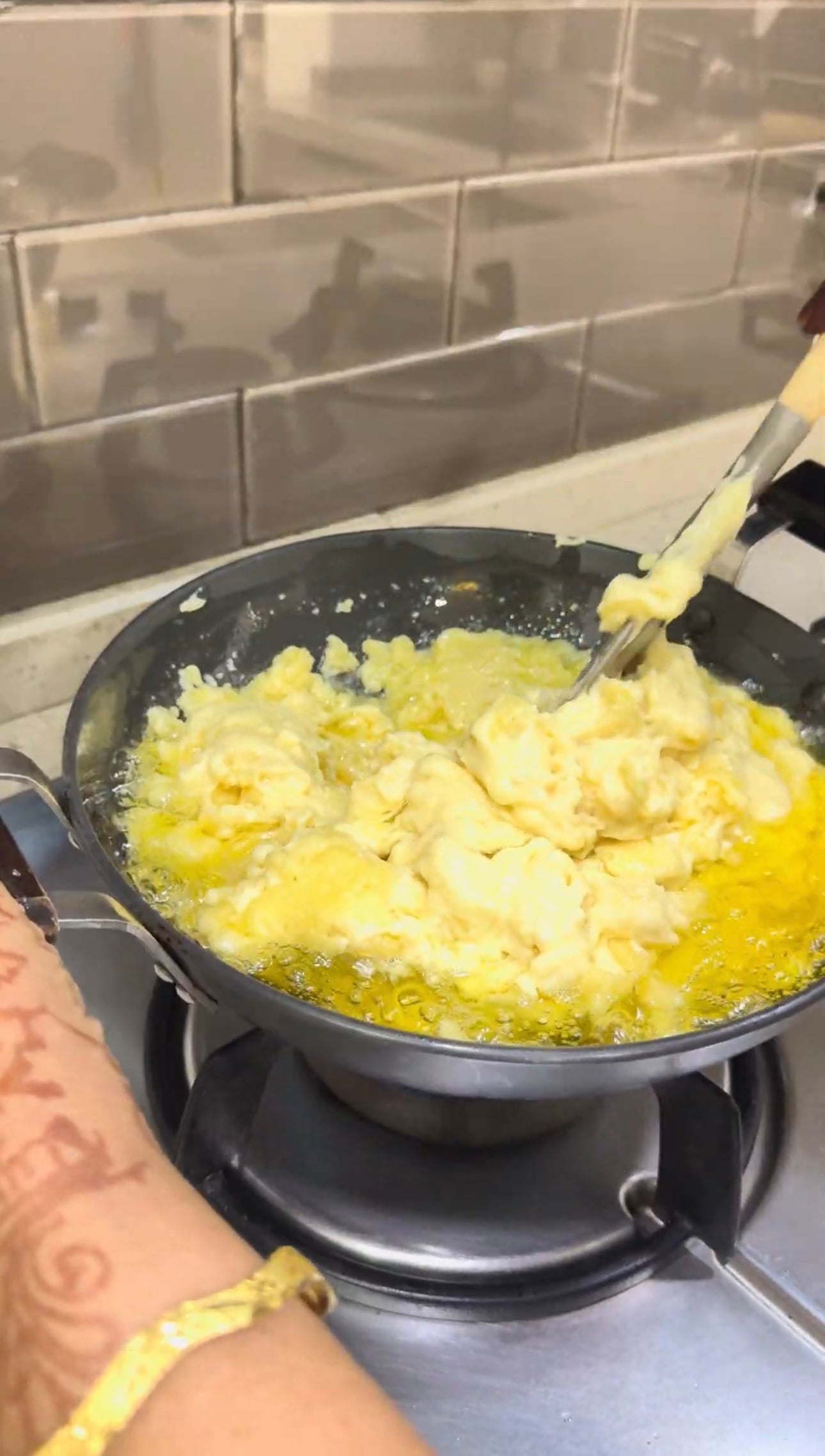
- Stir frequently — this step cannot be rushed.
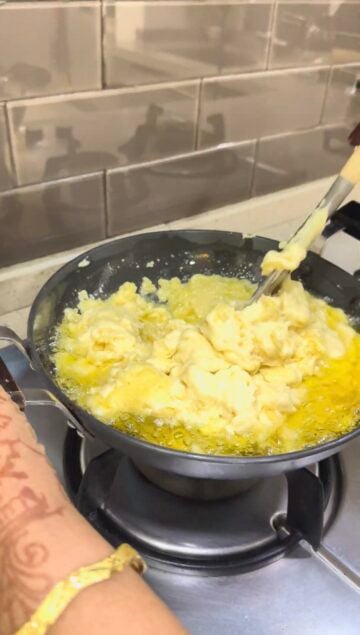
Step 4: Roasting Timeline
- 0–20 min: Thick, sticky, heavy paste
- 20–45 min: Mixture dries gradually; moisture evaporates
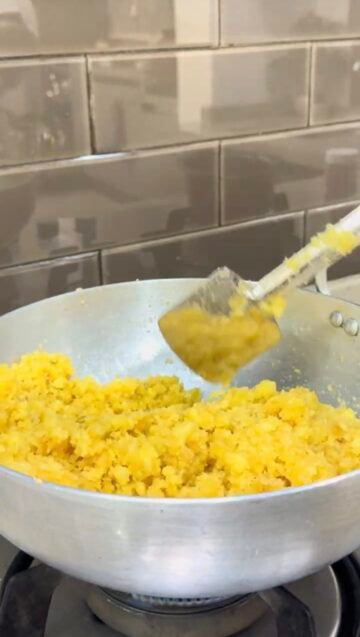
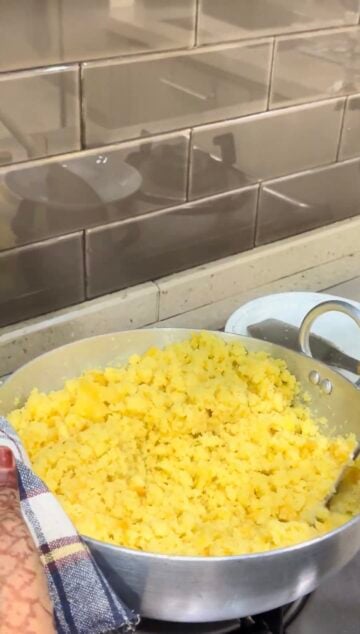
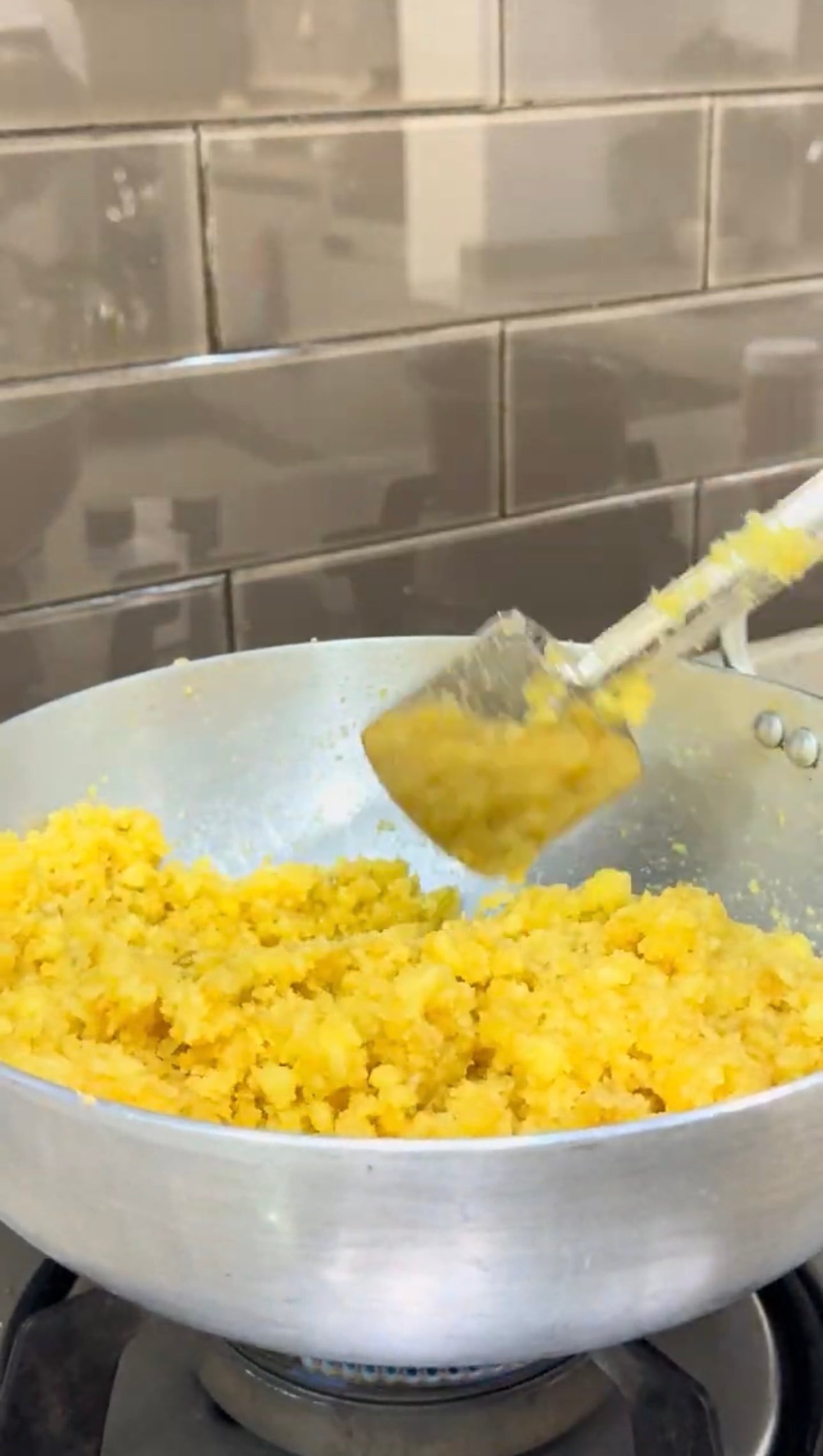
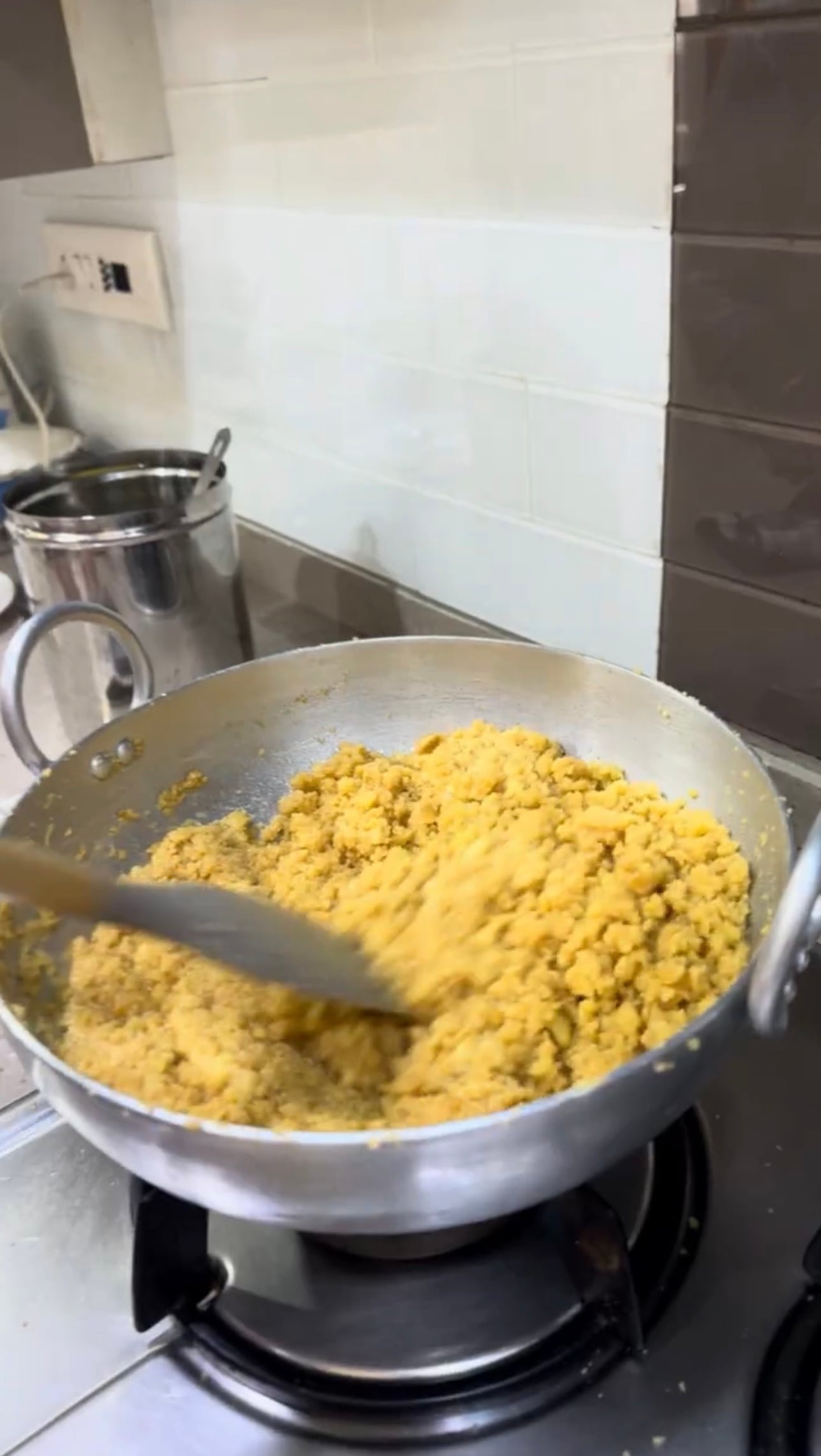
- 45–75 min: Dal breaks into soft crumbs; color deepens
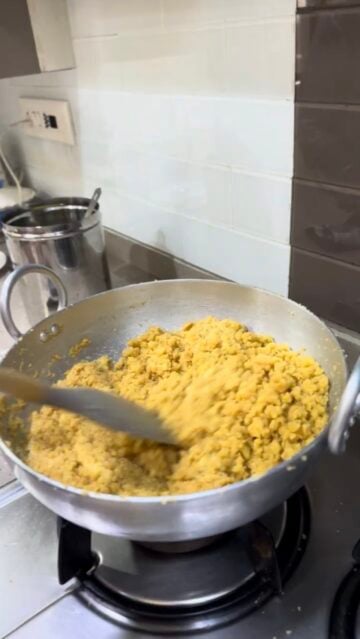
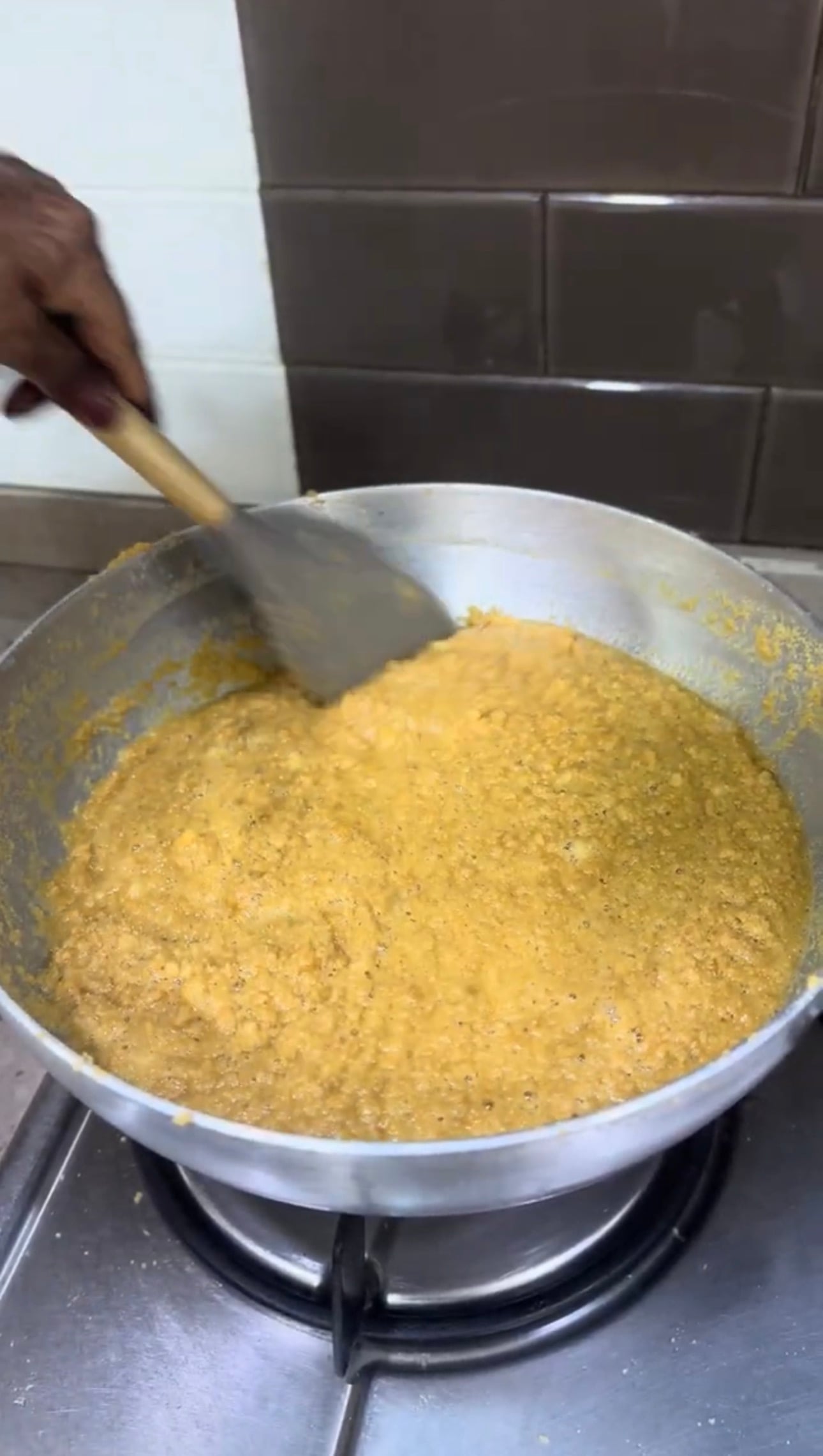
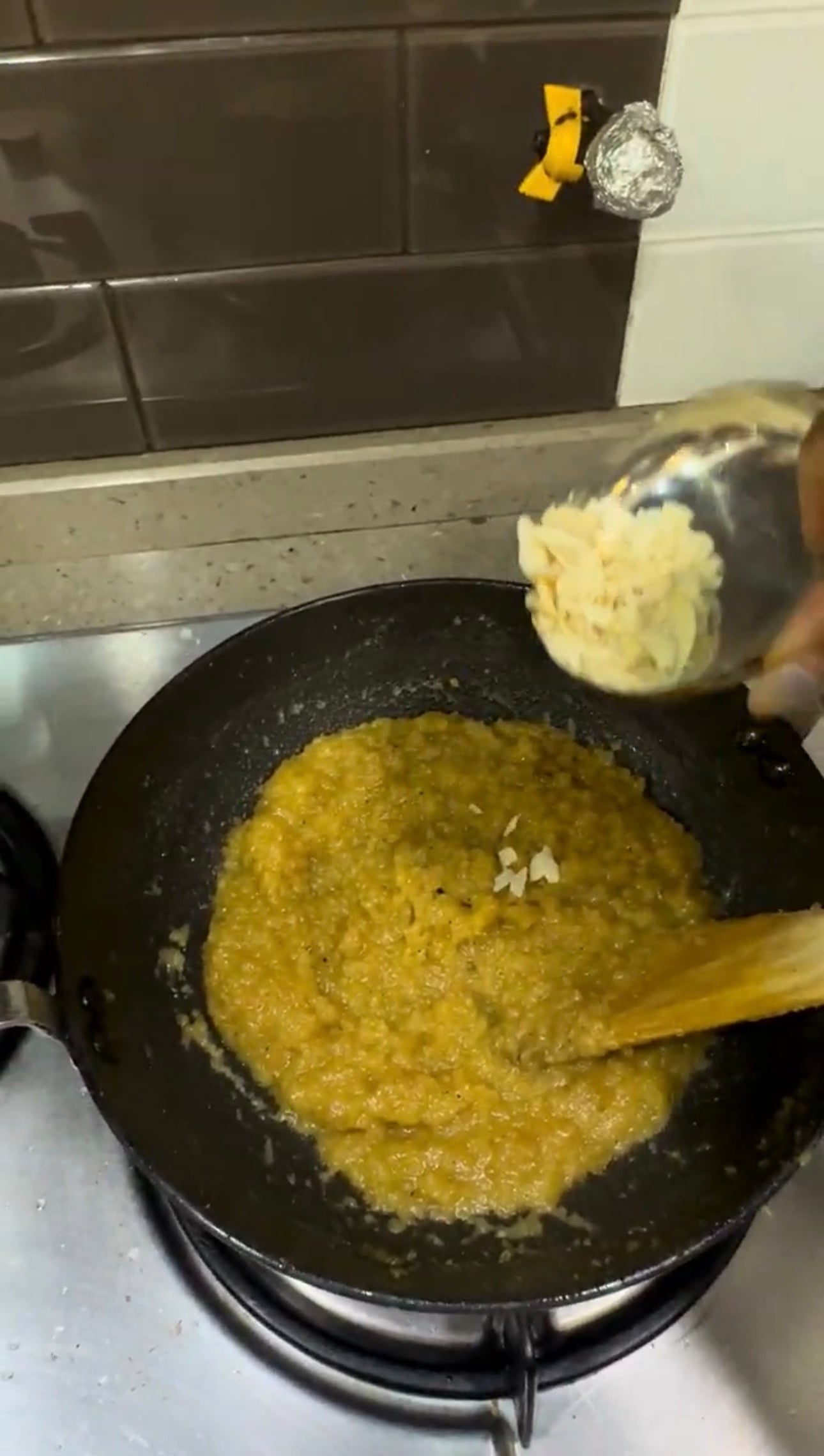
- 75–90 min: Color turns deep golden; rich aroma; signature grainy texture
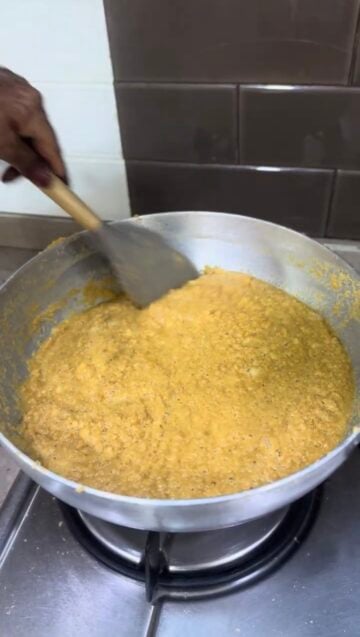
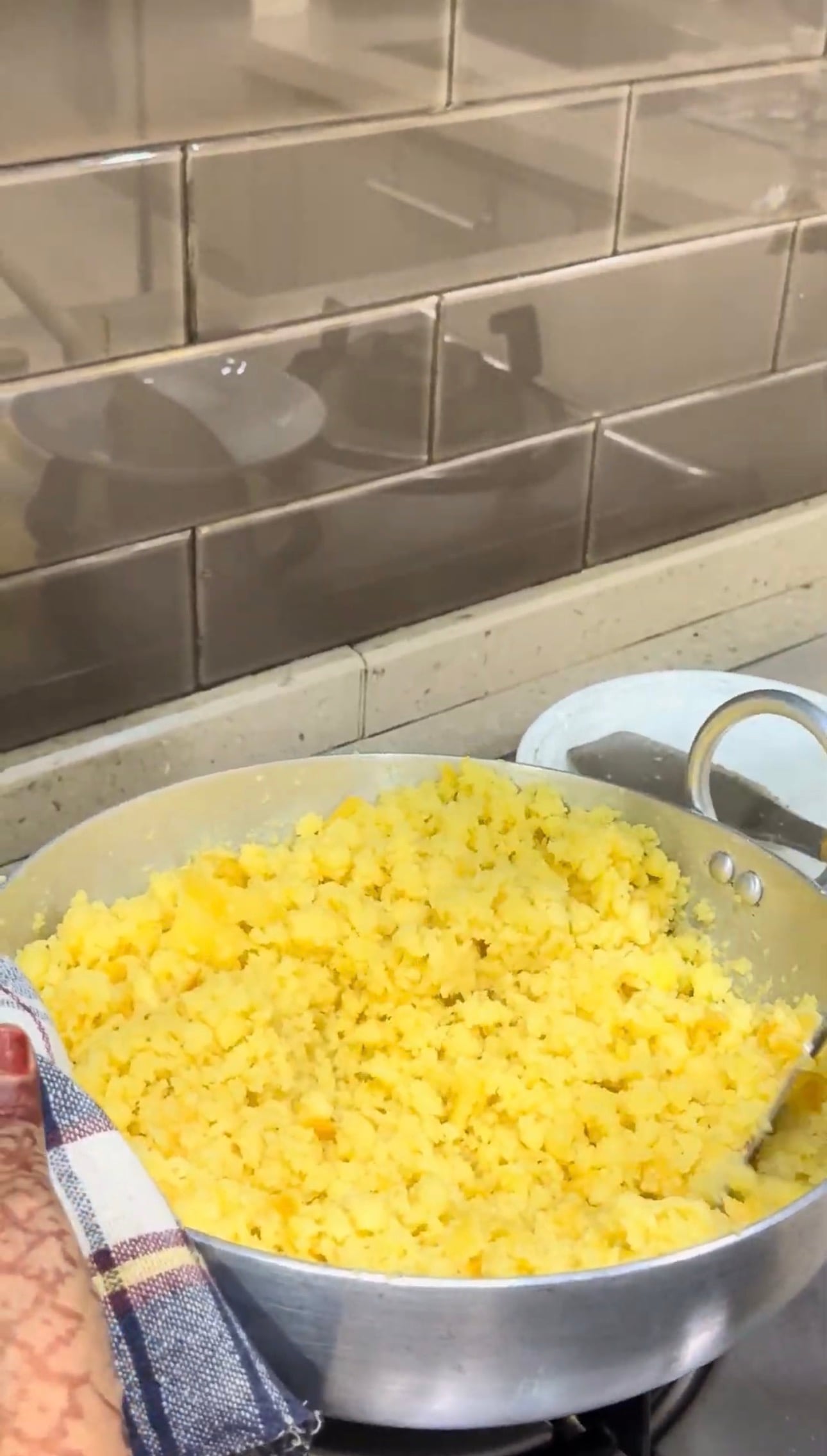
Step 5: Prepare Sugar-Water
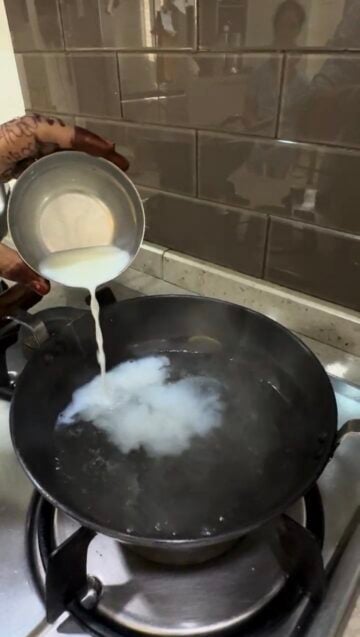
- Heat until sugar dissolves and the mixture come to oneboil. Do not cook it into syrup.
- Add a splash of milk to remove any impurities from sugar floats on the top
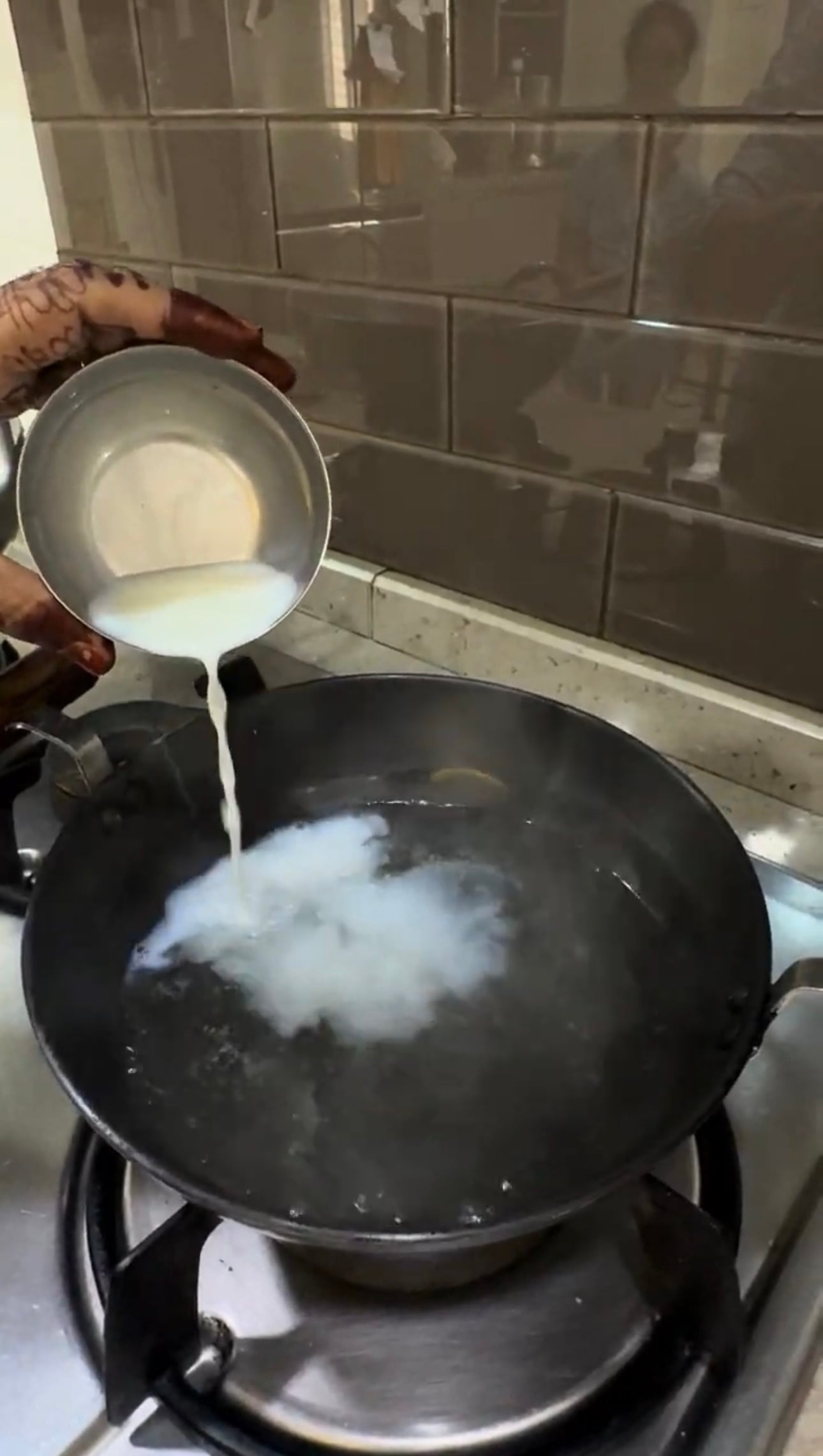
Step 6: Bring Sugar Syrup to Warm Stage
- Let the mixture cool down until warm. Boiling liquid can splatter and scald, so handle carefully.
Step 7: Finish the Halwa
- Slowly pour warm sugar-water into the roasted dal.
- Cook on low heat for 15 minutes, keep stiring.
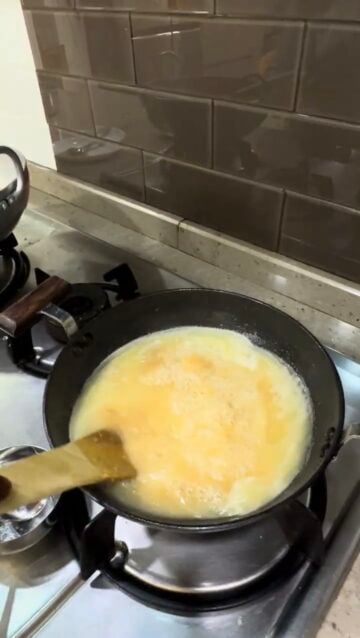
- The halwa will thicken, turn glossy, and release ghee from the sides.
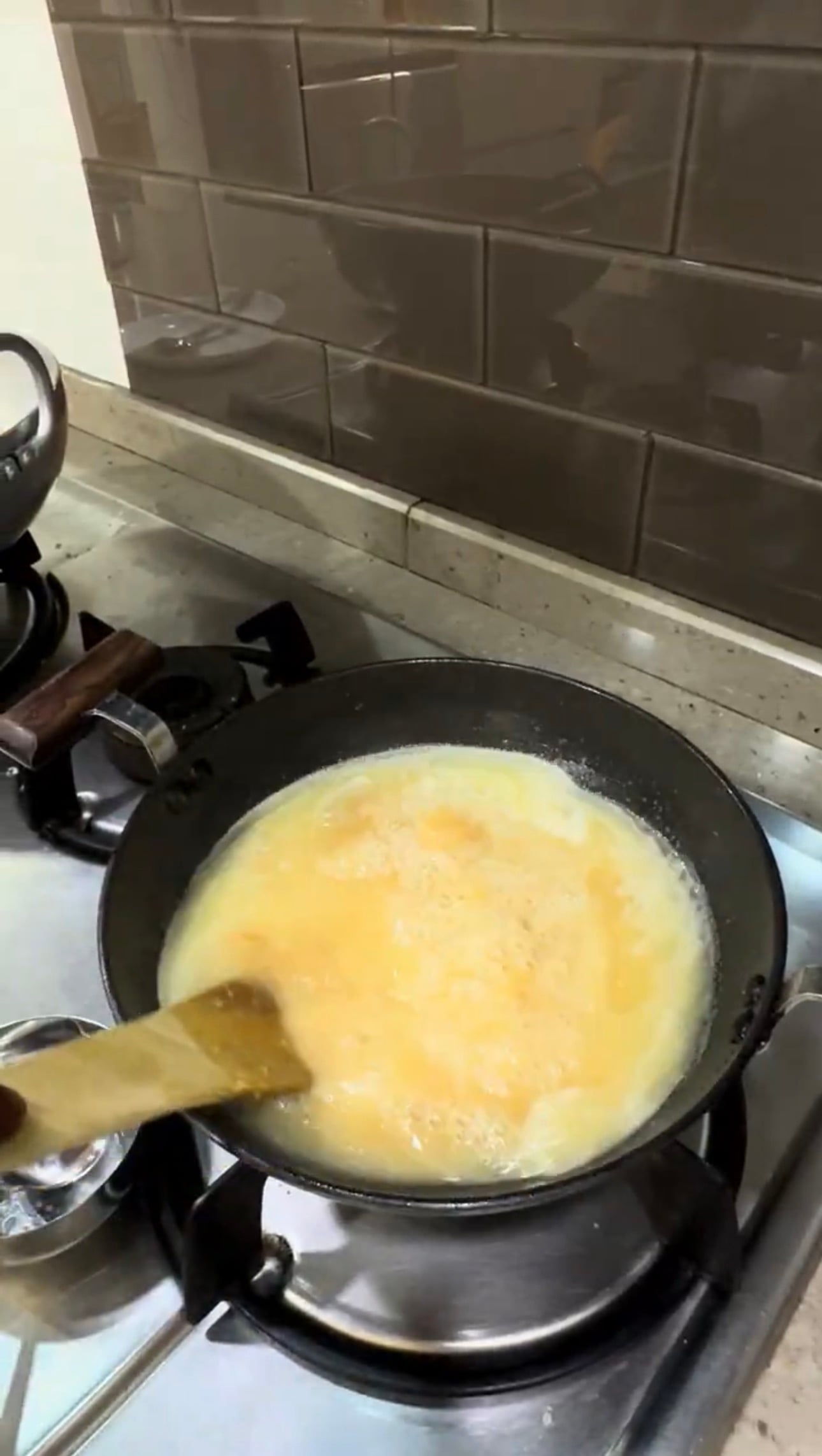
Step 8: Add Flavoring and Garnishing
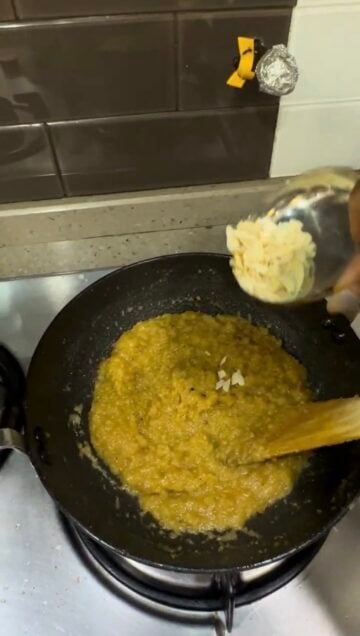
- Mix in cardamom and saffron powder, cook briefly until fragrant.
- Garnish with nuts and serve warm

Leave a Reply